Medicaid and emergency dental care
If you’re having severe tooth pain or a dental injury, getting care quickly matters. Medicaid may help in some situations, but rules vary a lot by state—here’s what to check and where to look next.
What to know first (so you don’t waste time)
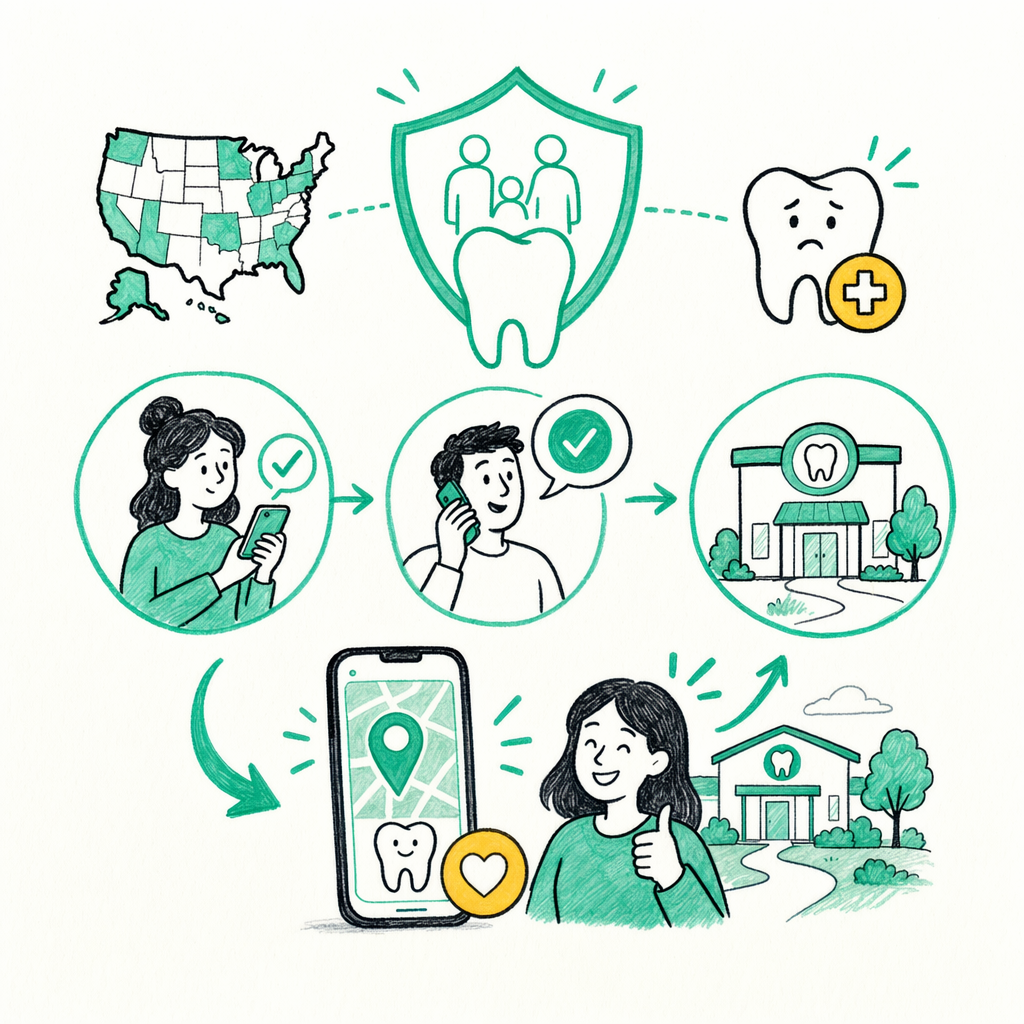
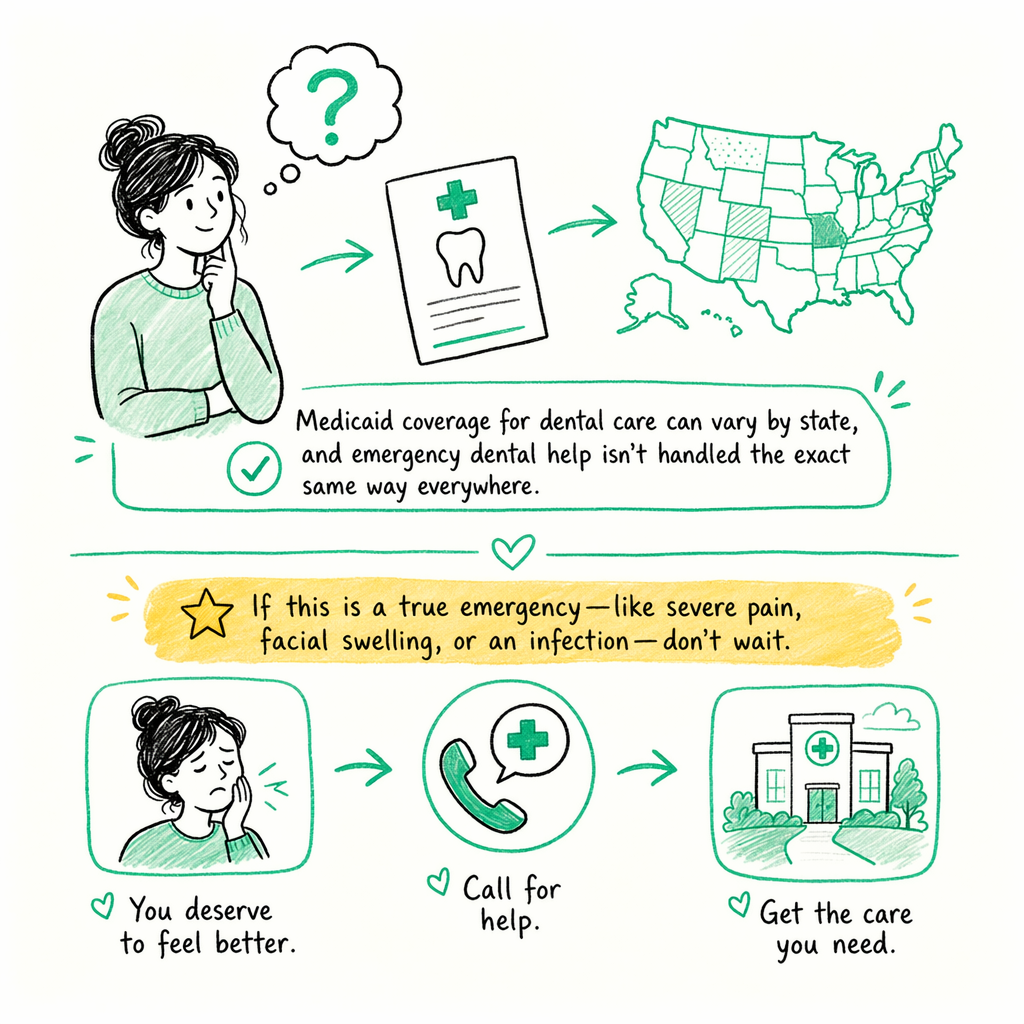
Medicaid coverage for dental care can vary by state, and emergency dental help isn’t handled the exact same way everywhere.
If this is a true emergency—like trouble breathing or swallowing, swelling spreading toward your eye or neck, or uncontrolled bleeding—go to the ER or call 911. A dental emergency can sometimes become a medical emergency.
If it’s severe pain or a broken/knocked-out tooth, you still need a licensed dentist or doctor as soon as possible. SteadyTooth can help you get connected with an emergency dentist near you (contact details only—no medical information needed).
Does Medicaid cover emergency dental care?
Often, Medicaid can help with some dental services, but the coverage may depend on:
• Your state
• Your specific Medicaid plan (and sometimes your eligibility group)
• Whether dental benefits are provided through Medicaid itself or through a managed care plan
• The type of dental emergency (pain, infection/swelling, broken tooth, knocked-out tooth)
Even when emergency dental care is covered, the exact services covered (and how bills are handled) can differ. That’s why it’s worth confirming quickly with your state’s Medicaid program or your plan’s member services.
How Medicaid dental coverage usually works (in plain terms)
In many states, dental benefits are separate from standard medical benefits. Some states cover a broader range of dental care; others cover more limited services.
When you call about an emergency, you can ask the office two practical questions:
- “Are you able to treat patients with my Medicaid plan?”
- “Do you handle Medicaid billing directly?”
If an office can’t take your plan, you still need help—there may be another emergency dentist or clinic nearby that can. Coverage and accepted plans can change, so asking directly is the fastest way to avoid dead ends.
Check your state quickly (and what to ask)
Because rules vary by state, the best next step is to identify your state and the exact Medicaid plan name on your Medicaid card.
If you can, use your Medicaid card to call member services and ask:
• “Do I have dental benefits?”
• “Are emergency dental services covered?”
• “Where can I go for after-hours or emergency dental care?”
• “Do I need prior authorization?” (Some services may, but emergency situations sometimes have different rules.)
If you don’t have your card with you, you can often find plan details by searching your state’s Medicaid website using your state and your name/date of birth—follow the instructions provided there.
If Medicaid doesn’t help right away, you still have options
Not every emergency dental need is covered the same way everywhere, and sometimes a dentist may not accept your plan in the location you need help. That doesn’t mean you should delay care.
Here are a few options to ask about when you call:
• Whether the dentist has an urgent dental visit option
• Whether they offer payment plans or sliding-scale pricing (costs vary by case and city)
• Whether they can work with your coverage details
For general guidance on dental emergency costs and what can affect pricing, see dental emergency costs.
How SteadyTooth can help (no medical info needed)
If you want help finding an emergency dentist near you, you can use SteadyTooth to request a connection. It’s free.
Contact details only — no medical information needed. You’ll share things like your name, phone number, city/ZIP, how soon you need help, and your preferred language.
If you’re not sure where to start, begin with get matched or browse emergency guidance at dental emergency symptoms.
When to go to the ER instead of waiting for dental care
Dental infections and injuries can sometimes turn serious.
Call 911 or go to the ER right away if you have any of these life-threatening signs:
• Trouble breathing or swallowing
• Swelling that’s spreading toward the eye or neck
• Uncontrolled bleeding
If you’re not sure, it’s okay to err on the side of safety and get medical help immediately. A dentist can still be important afterward, but the ER is for emergencies that affect breathing, swallowing, or spreading infection.
Medicaid dental coverage for emergencies depends on your state and plan, so check your Medicaid benefits fast, ask emergency dentists if they accept your plan, and use SteadyTooth to get connected near you.
SteadyTooth is a free matching service, not a dental provider or medical service, and does not give medical or dental advice or a diagnosis. The information here is general and educational. In a life-threatening emergency — trouble breathing or swallowing, swelling spreading toward the eye or neck, or uncontrolled bleeding — call 911 or go to the nearest emergency room. Costs and care vary by case, dentist, city, and state; always confirm details directly with a licensed dentist.
Common questions
I have Medicaid. Will I automatically be covered for an emergency dentist?
Not always. Medicaid dental coverage varies by state and by plan, and accepted coverage can also depend on which dentist is available near you. Contact your Medicaid plan/member services and ask what emergency dental services are covered and where to go after hours.
What if my Medicaid plan says dental is limited?
Even if coverage is limited, you can still seek urgent care for pain, broken teeth, or infection/swelling. Ask emergency dental offices what they can do and whether they can work with your Medicaid plan. You can also check other options and pricing realities through general cost guidance at /costs/.
Do I need to bring paperwork or my Medicaid card to an emergency dental visit?
In most cases, bring your Medicaid card if you have it and any identifying information the office requests. Requirements vary by provider, but having your plan details makes it easier for them to check eligibility and billing.
Can SteadyTooth help me find someone who accepts Medicaid?
SteadyTooth helps connect you with an emergency dentist near you. Coverage acceptance depends on the specific dentist and plan, so when you contact them, ask if they can treat Medicaid members on your exact plan.
Related help
Dental emergency guides
Honest, plain-language guides on handling a dental emergency, paying for urgent care without insurance, and finding help in your language.
Keep readingFind an emergency dentist near you — free
Tell us your city and how to reach you and we'll connect you, free, with an emergency dentist near you. Contact details only — no medical information needed.
Keep readingFind your symptom and what to do right now
Pick what's happening — severe tooth pain, a knocked-out or broken tooth, swelling or an abscess, bleeding — and get calm, plain-language steps plus a free way to find an emergency dentist.
Keep reading