When a dental problem means the ER, not the dentist
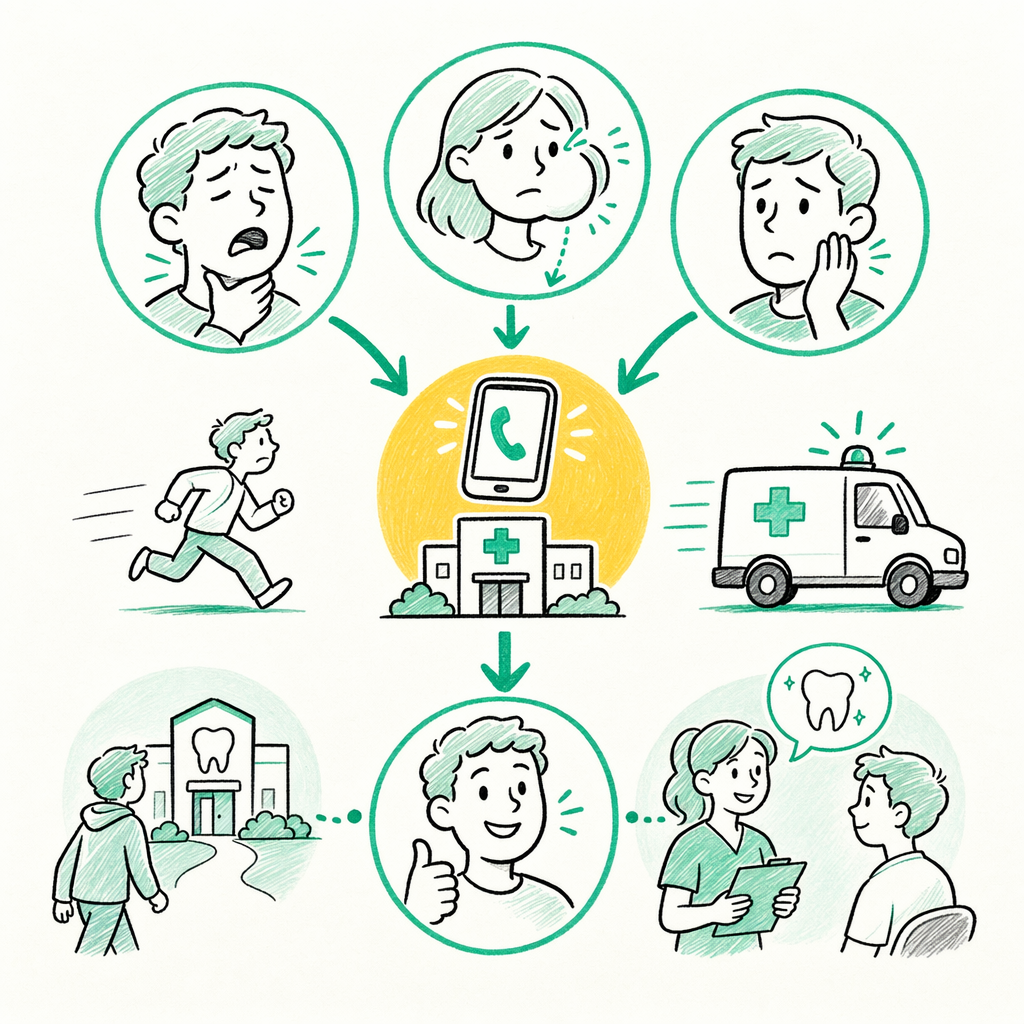
Most tooth problems are dental emergencies, but a few can be true medical emergencies. If you see certain warning signs, call 911 or go to the ER first—then contact a dentist as soon as you can.
What to do right now
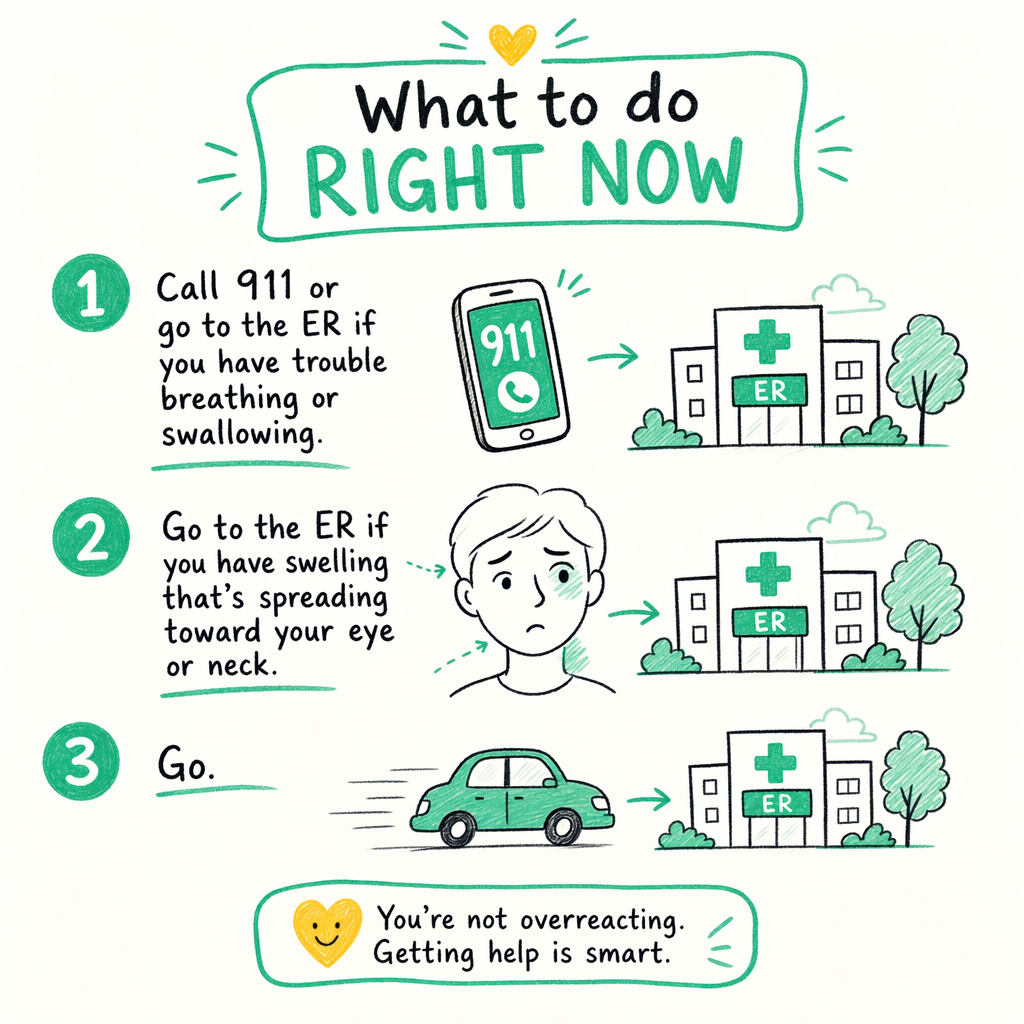
1. Call 911 or go to the ER if you have trouble breathing or swallowing.
2. Go to the ER if you have swelling that’s spreading toward your eye or neck.
3. Go to the ER if bleeding won’t stop (or is heavy/fast).
4. If you’re not in those danger zones, seek urgent dental care the same day or as soon as possible, especially if pain is severe.
5. While you’re arranging care, keep your head elevated and avoid hot drinks/heat on the area.
- SteadyTooth is a FREE service that helps you get connected with an emergency dentist near you—contact details only.
When tooth pain is more than a dental problem
Most dental issues—like a cavity, a cracked tooth, or a sore gum—need a dentist. But sometimes the problem can affect your airway, your ability to swallow, or spread quickly through the tissues.
If you have any of the red flags below, treat it like a medical emergency and get emergency care immediately.
Red flags: call 911 or go to the ER
These signs can mean a serious infection or another urgent medical problem. Don’t wait for a dental appointment.
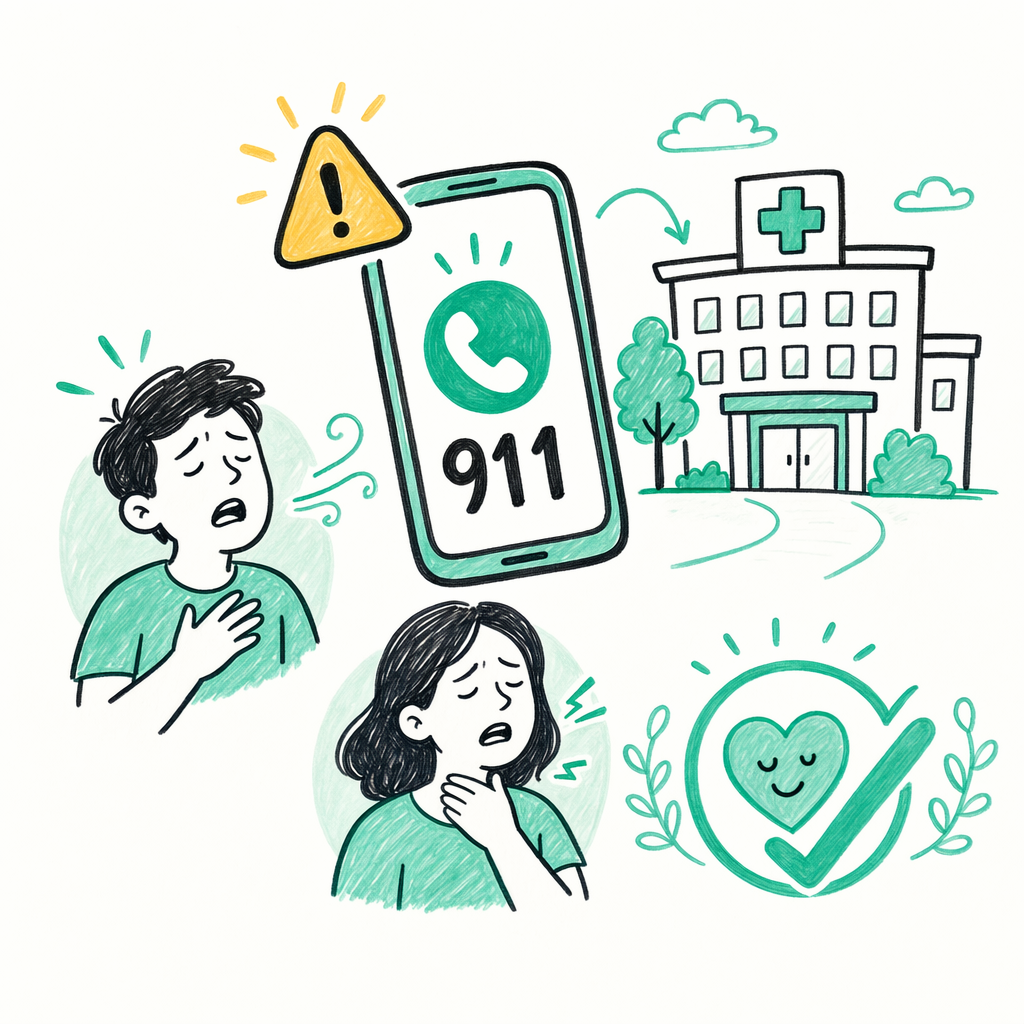
• Trouble breathing or trouble swallowing.
• Swelling that’s spreading toward the eye or neck.
• Uncontrolled or heavy bleeding.
If you’re unsure, it’s safer to err on the side of emergency care—especially with spreading swelling or breathing/swallowing problems.
If there’s no ER red flag: get urgent dental care
If you don’t have the ER warning signs, you still deserve fast help. Severe tooth pain, a knocked-out tooth, broken teeth, abscess-like swelling, or bleeding from a tooth can be urgent dental situations.
Check these guides for help deciding how urgent it is: symptoms and guides. If you want, you can also use get matched to be connected with an emergency dentist near you.
Simple self-care while you arrange help (general info)
You can use comfort measures temporarily, especially for pain. These don’t replace seeing a licensed dentist.
• Rinse gently with warm salt water (1/2 teaspoon salt in a cup of warm water). Don’t force it if it hurts to swallow.
• Use a cold compress on the outside of your cheek for swelling.
• If there’s a knocked-out tooth, handle it by the crown (the chewing part), rinse briefly with water if it’s dirty, and place it back into the socket if possible—or keep it in milk if you can. Then get to emergency dental care.
• Use over-the-counter pain relief only as directed on the label.
Avoid heavy heat, alcohol rinses, or putting aspirin directly on the gums. If symptoms worsen quickly, re-check the ER warning signs.
What to expect with emergency dental help (and cost basics)
Emergency dentists typically focus on safety first and on relieving pain or addressing urgent issues. Rules and available services vary by location and state.
If cost is on your mind, see costs for general ranges and the fact that coverage and out-of-pocket costs can vary by case and city. SteadyTooth is FREE for you and only asks for contact details—no medical information needed.
If you have trouble breathing or swallowing, spreading swelling toward the eye/neck, or uncontrolled bleeding, call 911 or go to the ER—then get urgent dental help.
SteadyTooth is a free matching service, not a dental provider or medical service, and does not give medical or dental advice or a diagnosis. The information here is general and educational. In a life-threatening emergency — trouble breathing or swallowing, swelling spreading toward the eye or neck, or uncontrolled bleeding — call 911 or go to the nearest emergency room. Costs and care vary by case, dentist, city, and state; always confirm details directly with a licensed dentist.
Common questions
My face is swelling. Is this an ER situation or can I wait for a dentist?
If swelling is spreading toward your eye or neck, or you have trouble breathing or swallowing, go to the ER or call 911. If it’s swelling that’s not spreading and you don’t have breathing/swallowing trouble, you still should seek urgent dental care the same day or as soon as possible.
What if I’m not sure whether my symptoms are an emergency?
If you have any ER red flags—trouble breathing or swallowing, spreading swelling toward the eye/neck, or uncontrolled bleeding—get emergency care now. When in doubt, it’s safer to treat it as urgent and get assessed.
Does SteadyTooth give medical advice or collect my symptoms?
No. SteadyTooth is general information only and does not diagnose. If you use the service, it collects contact details only—no medical or dental history needed.
How much will emergency dental care cost?
Costs vary by the specific problem, the dentist, and your city/state. For general info and cost considerations, you can review [costs](/costs/). SteadyTooth is FREE for you.
Related help
Dental emergency guides
Honest, plain-language guides on handling a dental emergency, paying for urgent care without insurance, and finding help in your language.
Keep readingFind an emergency dentist near you — free
Tell us your city and how to reach you and we'll connect you, free, with an emergency dentist near you. Contact details only — no medical information needed.
Keep readingFind your symptom and what to do right now
Pick what's happening — severe tooth pain, a knocked-out or broken tooth, swelling or an abscess, bleeding — and get calm, plain-language steps plus a free way to find an emergency dentist.
Keep reading