Can the ER fix a tooth?
Usually, no. An ER can help with dangerous symptoms and pain, but most ERs do not do full dental treatment. If your problem is dental, the clearest next step is to find an emergency dentist as soon as you can.
Short answer
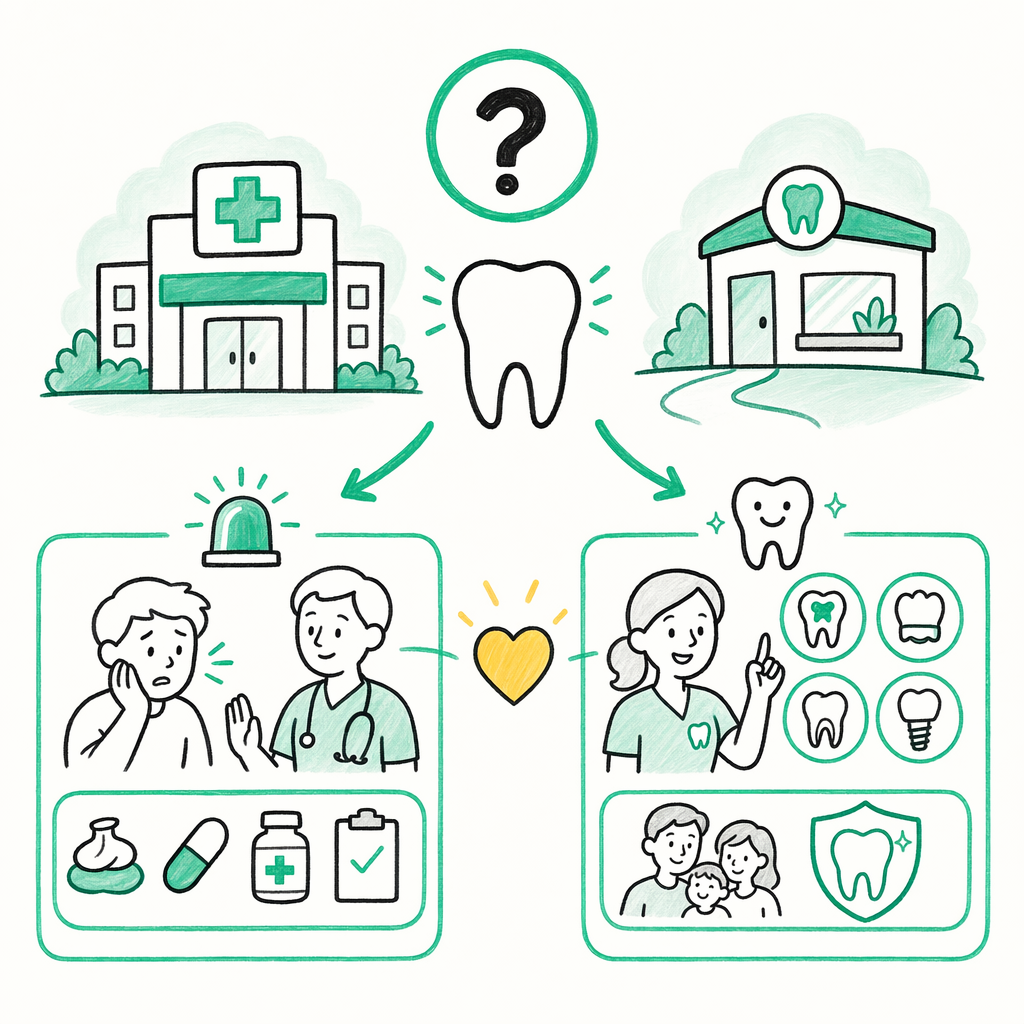
Usually, the ER cannot fully fix a tooth. Most emergency rooms are set up to handle medical emergencies, not dental procedures like fillings, crowns, root canals, or pulling a tooth unless the situation is more serious.
What the ER may do is check for a dangerous infection, help control bleeding, treat swelling that could affect breathing, and give general emergency care. In some cases, they may help with pain in the short term or tell you where to go next.
If the problem is a broken tooth, severe toothache, lost filling, cracked tooth, or a knocked-out tooth, an emergency dentist is usually the right place to go. SteadyTooth is a free way to help you find help fast through get matched. Contact details only — no medical information needed.
When you should go to the ER
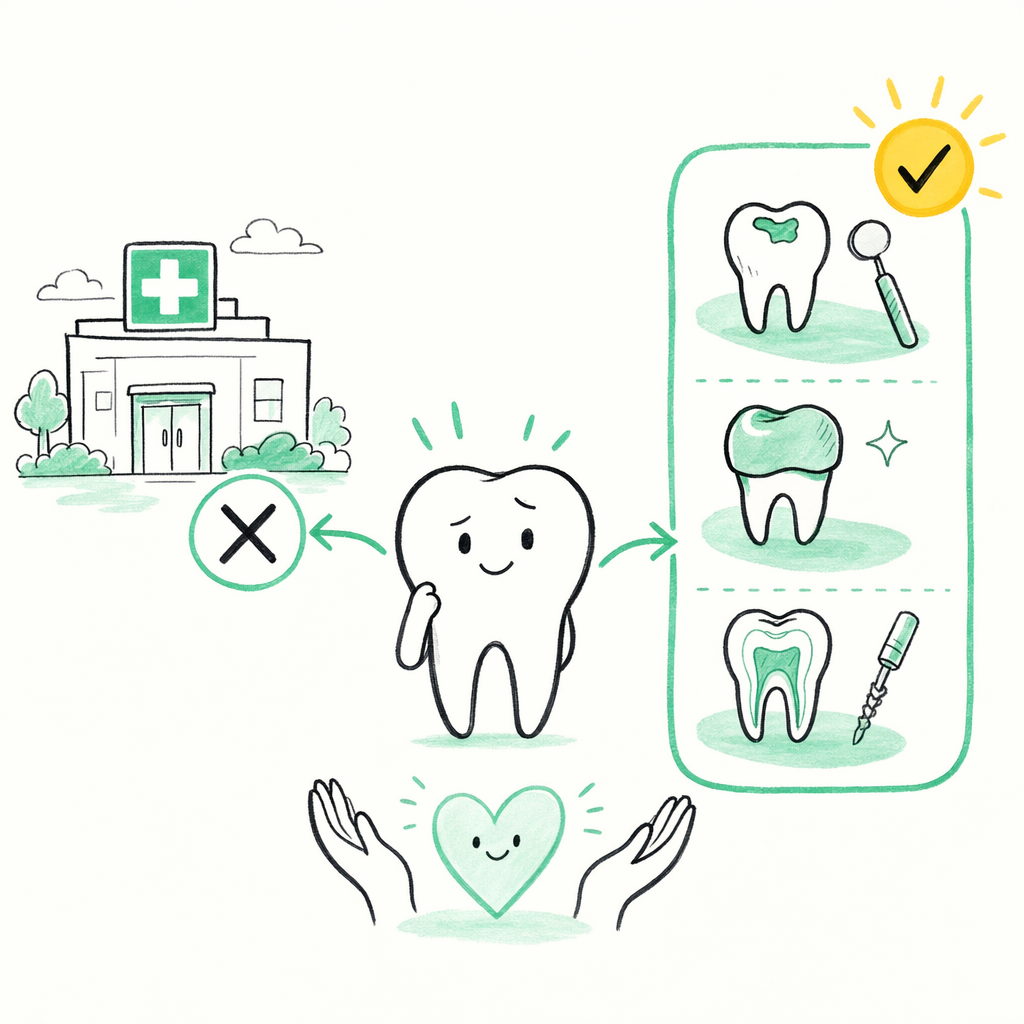
Go to the ER or call 911 right away if you have trouble breathing or swallowing, swelling spreading toward the eye or neck, or bleeding that will not stop. Those can be true emergencies.
The ER is also the right place if you have a bad facial injury, possible broken jaw, high fever with serious swelling, or you feel very weak, confused, or unsafe. A dental problem can sometimes become a medical emergency.
If you are not sure, it is okay to act on the safer option. Get emergency medical help first for life-threatening symptoms, then follow up with a licensed dentist.
What an ER can and cannot usually do
An ER can often rule out the most dangerous problems. They may look for signs of infection spreading, facial trauma, dehydration, or uncontrolled bleeding. They may offer general medical support and tell you if you need urgent dental follow-up.
But many ERs do not have a dentist on site. That means they usually cannot repair a chipped tooth, replace a crown, save a knocked-out tooth with dental treatment, or complete treatment for the cause of tooth pain.
That is why many people leave the ER still needing a dentist. If you want to understand common dental emergencies first, start with symptoms.
What to do for common tooth problems
These are general steps only, not a diagnosis or personal advice. A licensed dentist should check the problem.
For tooth pain, rinse gently with warm salt water and use a cold compress on the cheek. Over-the-counter pain relief may help if you use it exactly as directed on the label.
For a knocked-out adult tooth, hold it by the top, not the root. If it is dirty, rinse it gently with water for a few seconds. Try to keep it moist in milk and get to a dentist right away.
For a chipped or broken tooth, rinse your mouth gently and use a cold compress on the outside of the cheek. Save any broken pieces if you can.
For swelling, do not ignore it. Mild swelling still needs a dentist soon, and dangerous swelling needs the ER. If swelling is moving toward your eye or neck, or you have trouble breathing or swallowing, call 911 or go to the ER.
How to decide where to go
A simple way to think about it: if it feels life-threatening, go to the ER. If it is painful, broken, loose, infected, or knocked out but you can breathe and swallow normally, an emergency dentist is usually the better first stop.
Many people search for the ER because it is open late. That makes sense. But if the problem is mainly your tooth, you may get more complete help from a dentist who handles urgent care after hours.
If you need help finding one, SteadyTooth can help. It is free for the reader and meant for people in the United States, including new immigrants and non-native English speakers. You share contact details only — no medical information needed.
What about cost?
ER care and dental care are billed differently, and costs vary a lot by city, dentist, hospital, insurance, and what treatment is needed. In general, an ER visit may still leave you needing to pay separately for a dentist afterward.
For many dental problems, going straight to an emergency dentist may be the more direct path to actual treatment. But if you have dangerous symptoms, cost should not stop you from getting emergency medical help first.
If you want a plain-language overview, see costs. Coverage, billing rules, and dental benefits can vary by state.
The ER can help with dangerous dental-related emergencies, but most tooth problems still need an emergency dentist to actually fix them.
SteadyTooth is a free matching service, not a dental provider or medical service, and does not give medical or dental advice or a diagnosis. The information here is general and educational. In a life-threatening emergency — trouble breathing or swallowing, swelling spreading toward the eye or neck, or uncontrolled bleeding — call 911 or go to the nearest emergency room. Costs and care vary by case, dentist, city, and state; always confirm details directly with a licensed dentist.
Common questions
Can the ER pull a tooth?
Usually not. Most ERs do not do routine dental procedures like tooth removal, so they may treat urgent medical concerns and then tell you to see a dentist.
Will the ER help with severe tooth pain?
They may help check for dangerous problems and give general emergency care, but they often cannot fix the tooth itself. A licensed dentist is usually needed to treat the cause.
Should I go to the ER for a tooth infection?
If you have trouble breathing or swallowing, swelling spreading toward the eye or neck, or uncontrolled bleeding, call 911 or go to the ER right away. If not, an emergency dentist is usually the right place to be seen soon.
Can the ER fix a broken or knocked-out tooth?
Usually not with full dental treatment. A dentist is generally the right person to repair a broken tooth or try to save a knocked-out tooth.
How can SteadyTooth help?
SteadyTooth is not a dentist or clinic. It is a free service that helps connect you with an emergency dentist near you using contact details only — no medical information needed.
Related help
Quick answers for dental emergencies
Short, plain-language answers to the questions people ask in a dental emergency — tooth pain, knocked-out and broken teeth, swelling, cost, and finding care fast.
Keep readingFind your symptom and what to do right now
Pick what's happening — severe tooth pain, a knocked-out or broken tooth, swelling or an abscess, bleeding — and get calm, plain-language steps plus a free way to find an emergency dentist.
Keep readingFind an emergency dentist near you — free
Tell us your city and how to reach you and we'll connect you, free, with an emergency dentist near you. Contact details only — no medical information needed.
Keep reading