Chipped tooth with no pain — is it urgent?
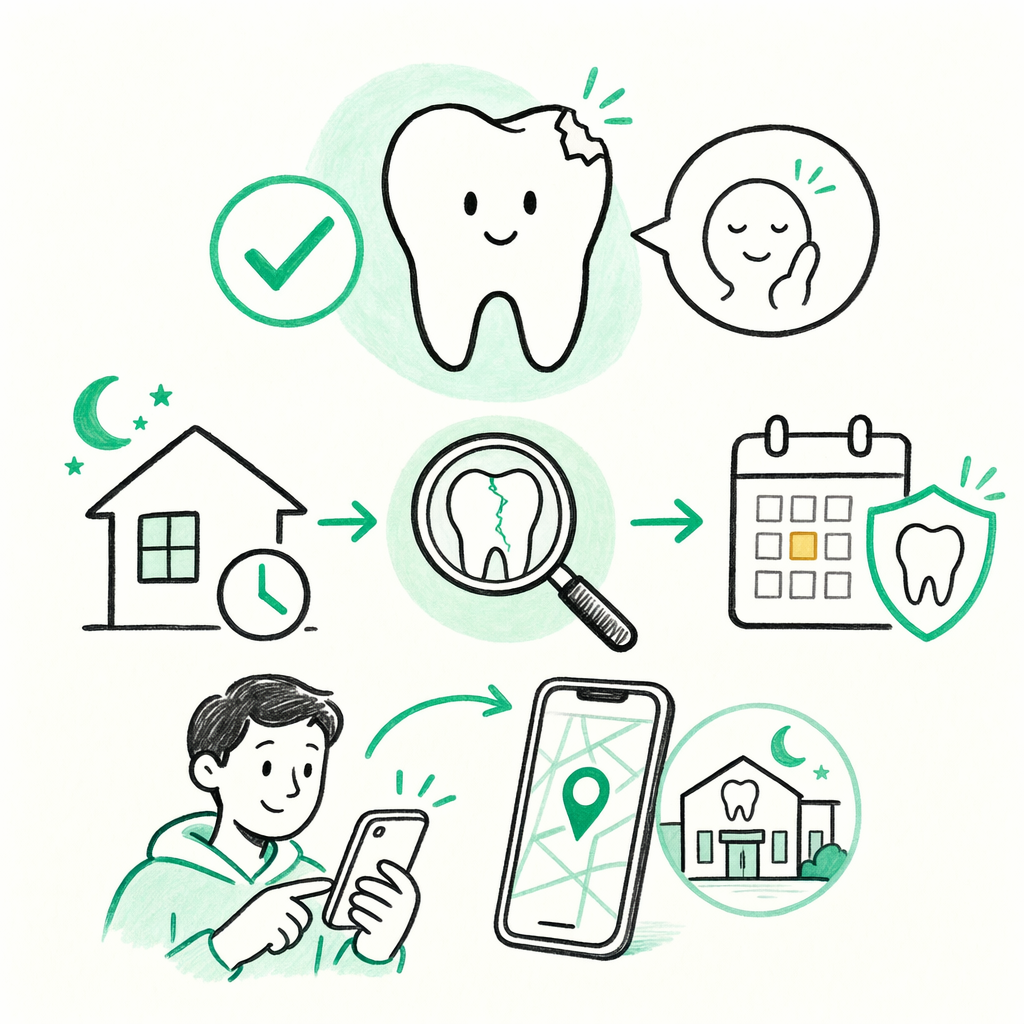
A chipped tooth can be scary, but if you have no pain, it’s often not an emergency. Still, it’s worth getting checked soon so you don’t end up with hidden cracks or sensitivity later.
What to do right now
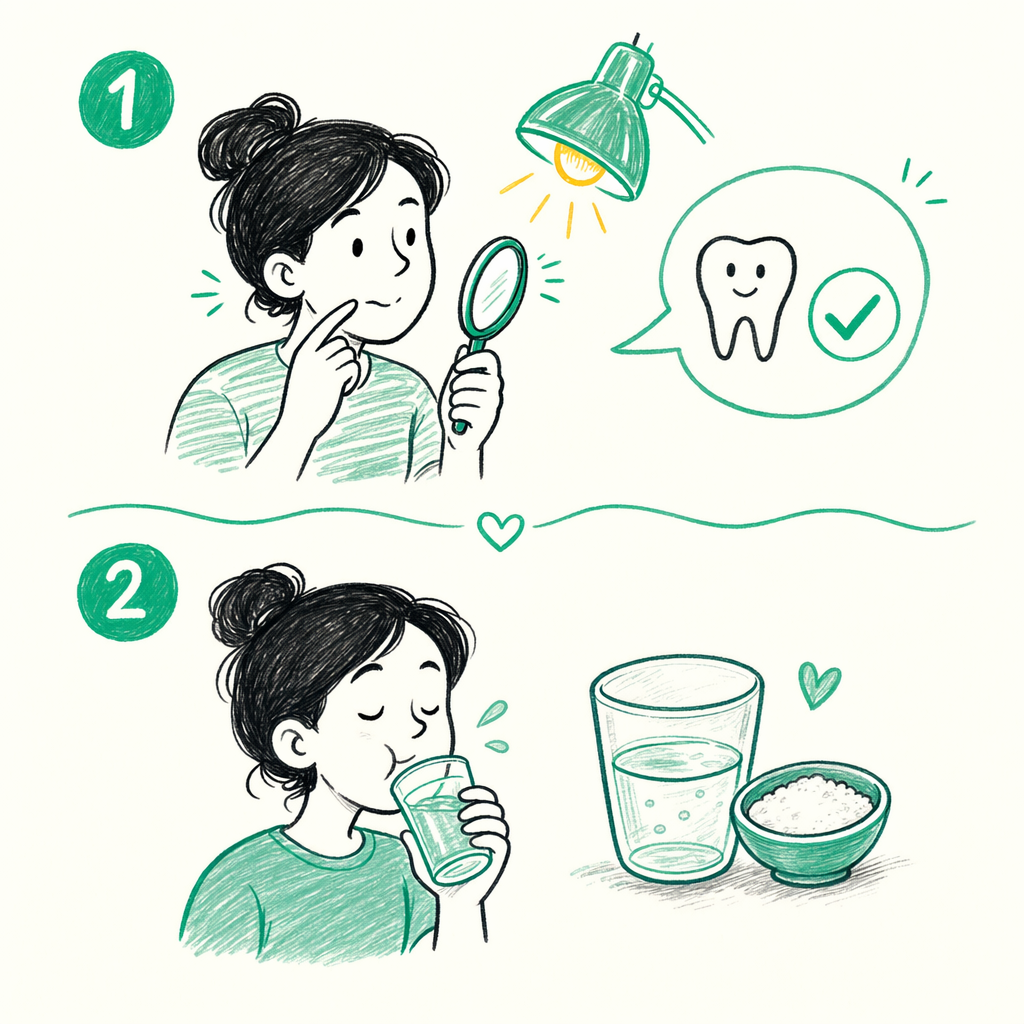
1. Look closely in good light. If the chip is small and there’s no bleeding or swelling, monitor it for changes.
2. Rinse your mouth with warm salt water (about 1/2 teaspoon of salt in a cup of warm water) to keep the area clean.
3. If the chip is sharp, cover it temporarily with dental wax (or sugar-free gum if you don’t have wax) to avoid cutting your tongue or cheek.
4. Avoid biting on that side and avoid very hot, cold, or sweet foods if you notice any new sensitivity.
5. Book a dental visit soon. A dentist can check for cracks beneath the surface—even when there’s no pain.
6. Use a free service to find an after-hours or same-day emergency dentist if you can’t get in quickly: get matched. Contact details only—no medical information needed.
Is a chipped tooth without pain urgent?
Often, it’s not an emergency when there’s no pain, no bleeding, and no swelling. Many chips can be repaired or smoothed to prevent future problems.
But “no pain” doesn’t always mean “no issue.” Sometimes a small chip still means the tooth has a crack or the enamel is damaged. Those can start hurting later, especially with chewing or temperature changes.
A practical rule: if it happened recently, or if the tooth feels rough/sharp, try to get checked within a few days—faster if you notice sensitivity or the chip keeps changing.
Go to the ER or call 911 if any red flags show up
Even if you didn’t have pain at first, seek emergency help if you have a life-threatening symptom.
Call 911 or go to the ER if there’s trouble breathing or swallowing, or if swelling is spreading toward the eye or neck, or if bleeding won’t stop.
If you’re unsure, it’s okay to err on the safe side—emergencies are about safety, not just tooth repair.
When to treat it as “urgent,” even without pain
You should move faster (same-day/after-hours if you can) if any of these are true:
- The chip happened from an injury (fall, hit, sports). Trauma can cause hidden cracks.
- The edge feels sharp enough to repeatedly cut your mouth.
- You develop new sensitivity to cold, hot, or sweet within 24–72 hours.
- You notice a gap, missing chunk, or the tooth looks like it’s “breaking further.”
- The tooth is loose or you can feel movement.
If any of those apply, look for emergency dental help or use get matched to connect with an emergency dentist near you.
What you can do at home until you’re seen
Keep it clean and protect the area. The goal is comfort and preventing extra damage.
- Rinse with warm salt water if food gets stuck or the area feels irritated.
- Use cold compress on the outside of the cheek if you feel any mild swelling or irritation.
- Take over-the-counter pain relief only if you need it, and follow the package directions.
- Avoid chewing ice, hard candy, or very chewy foods on that side.
- If there’s a sharp edge, use dental wax if you have it, or ask a dentist for a quick protective option when you’re seen.
If you had a knocked-out tooth or a larger break, steps can change—see more guidance in help and symptoms.
How SteadyTooth can help (free)
SteadyTooth helps people in the United States find an emergency dentist near them when they need urgent dental care.
If your chip is new or you want faster guidance on who to call after hours, you can use get matched. Contact details only—no medical information needed.
Costs can vary by case, dentist, and city. If you’re trying to plan, see dental cost basics for general ranges and what may affect pricing. Also, dental coverage rules vary by state.
A chipped tooth without pain is often not an emergency, but it should be checked soon to rule out cracks—use SteadyTooth to find after-hours care if you can’t wait.
SteadyTooth is a free matching service, not a dental provider or medical service, and does not give medical or dental advice or a diagnosis. The information here is general and educational. In a life-threatening emergency — trouble breathing or swallowing, swelling spreading toward the eye or neck, or uncontrolled bleeding — call 911 or go to the nearest emergency room. Costs and care vary by case, dentist, city, and state; always confirm details directly with a licensed dentist.
Common questions
My tooth is chipped but I don’t have pain. Should I still see a dentist?
Yes—it's still smart to get a dental check soon. A dentist can look for cracks or enamel damage that may not hurt right away.
What if the chip happened yesterday and I feel fine?
Treat it as “soon,” not “panic.” Rinse with warm salt water, protect any sharp edge, and schedule a dental visit within the next few days. If sensitivity starts or the tooth feels like it’s worsening, seek after-hours help.
Is a sharp edge in my mouth an emergency?
It’s not usually life-threatening, but it can be urgent for comfort and to prevent more damage. Cover the sharp spot temporarily and contact a dentist soon, especially if it keeps cutting your tongue or cheek.
When does a chipped tooth become an emergency?
Seek emergency help if you have trouble breathing or swallowing, swelling spreading toward the eye or neck, or uncontrolled bleeding. Otherwise, urgency depends on the injury, new sensitivity, crack signs, or how quickly things are changing.
Related help
Quick answers for dental emergencies
Short, plain-language answers to the questions people ask in a dental emergency — tooth pain, knocked-out and broken teeth, swelling, cost, and finding care fast.
Keep readingFind your symptom and what to do right now
Pick what's happening — severe tooth pain, a knocked-out or broken tooth, swelling or an abscess, bleeding — and get calm, plain-language steps plus a free way to find an emergency dentist.
Keep readingFind an emergency dentist near you — free
Tell us your city and how to reach you and we'll connect you, free, with an emergency dentist near you. Contact details only — no medical information needed.
Keep reading