Cracked tooth — what to do right now
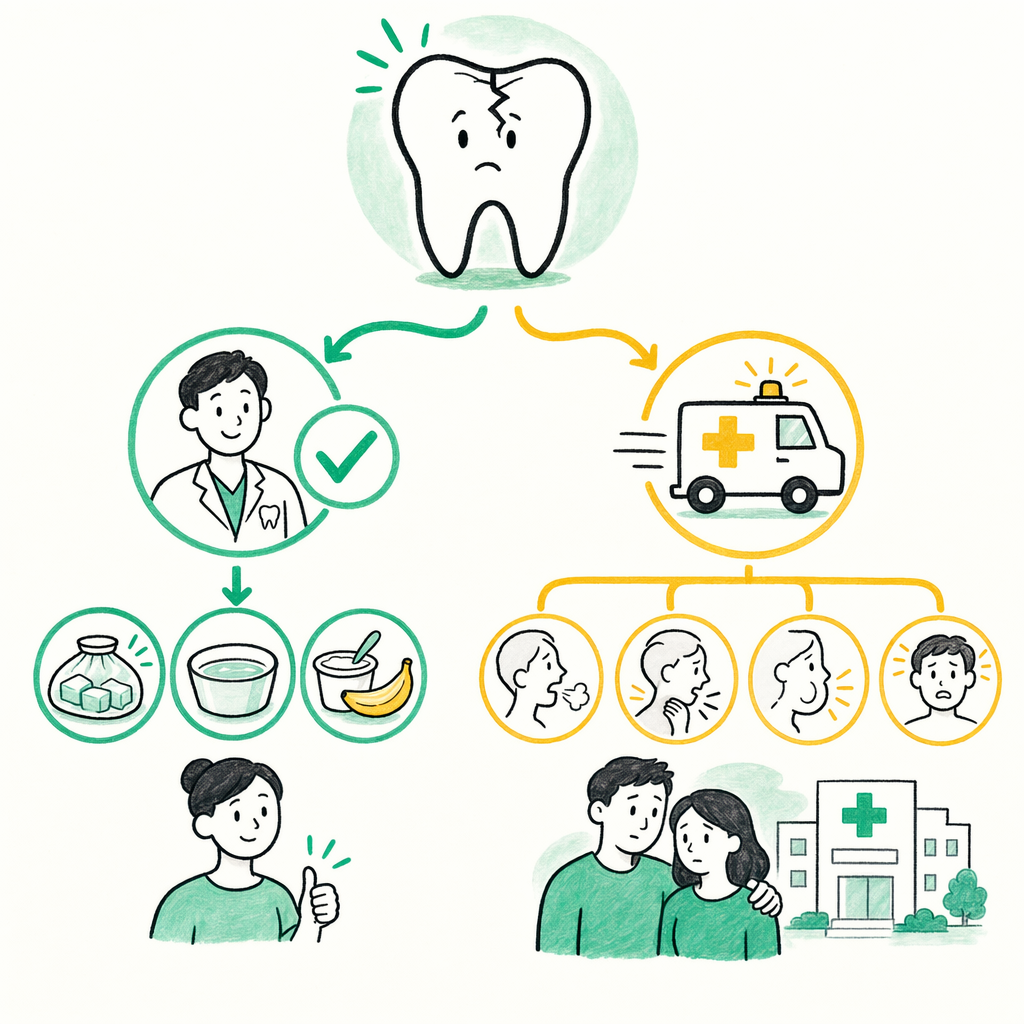
If your tooth is cracked, the safest next step is to call a licensed dentist right away and get seen as soon as you can. If you have trouble breathing or swallowing, swelling toward the eye or neck, or bleeding that will not stop, call 911 or go to the ER now.
What to do right now
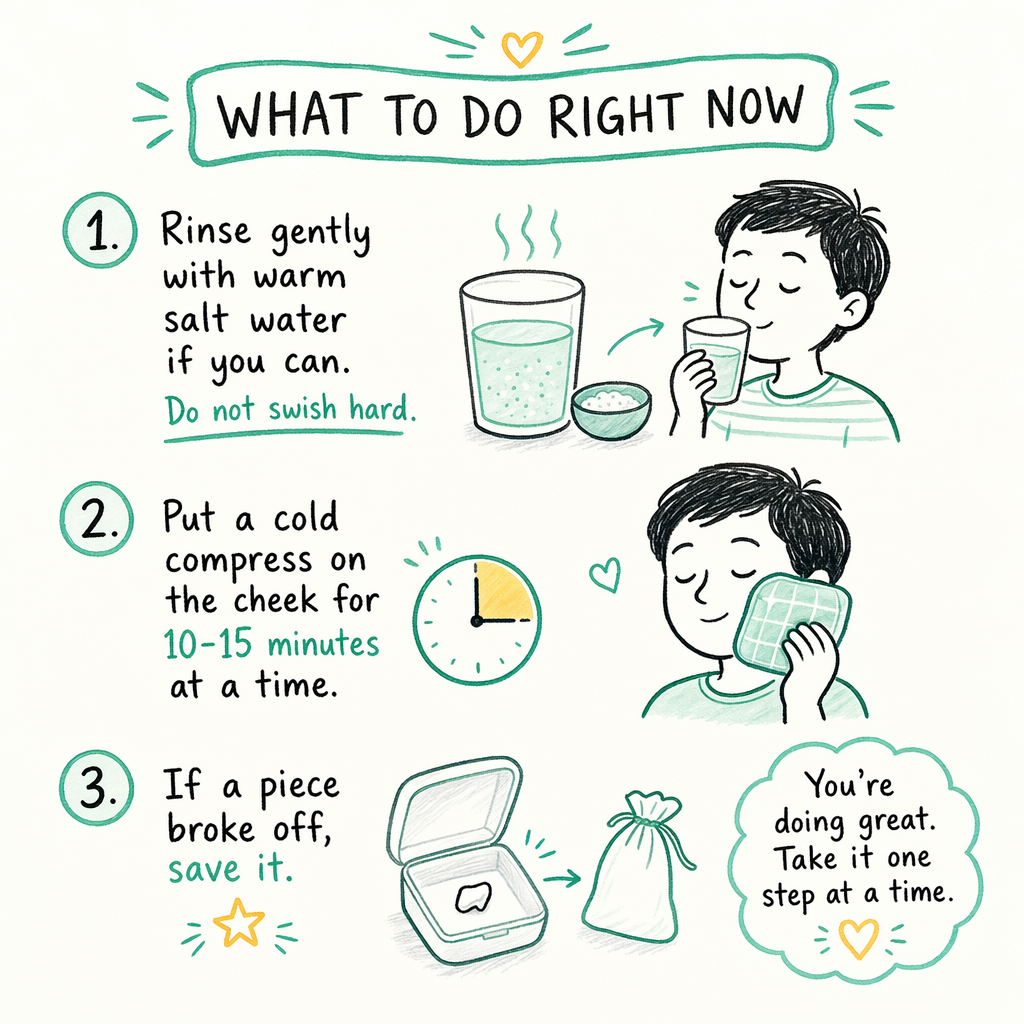
- Rinse gently with warm salt water if you can. Do not swish hard.
- Put a cold compress on the cheek for 10–15 minutes at a time.
- If a piece broke off, save it in a clean container. If a tooth was knocked out, keep it in milk.
- Avoid chewing on that side. Stick to soft foods.
- Use over-the-counter pain relief only as directed on the label, if you normally can take it.
- Call a licensed dentist today. If you need help finding one fast, use get matched for a free connection with a local emergency dentist.
- Go to the ER or call 911 for trouble breathing or swallowing, swelling spreading to the eye or neck, or uncontrolled bleeding.
- This page is general information only, not a diagnosis or personal dental advice.
Why a cracked tooth needs prompt care
A crack can let bacteria and pressure reach the inside of the tooth. That can turn into strong pain, infection, or a tooth that breaks more over time.
Even small cracks can be serious. The tooth may look minor from the outside but still need urgent treatment from a dentist.
SteadyTooth is a free service that helps people in the United States find emergency dental help. We are not a clinic, and we do not diagnose or treat.
- Dental coverage and emergency rules vary by state.
- A dentist is the right person to tell you how serious the crack is.
Signs you should not wait
Some cracks are more urgent than others. Try to get help quickly if the tooth is painful when you bite, sensitive to hot or cold, bleeding around the tooth, or has a visible split.
If the tooth is jagged, protect your tongue and cheek. You can cover a sharp edge with dental wax if you have it, but do not glue the tooth or try to file it down.
If you are unsure, help can walk you through the next step and connect you with a nearby dentist.
- Do not put aspirin directly on the tooth or gums.
- Do not ignore swelling, fever, or a bad taste that keeps coming back.
How a dentist may handle it
A dentist may look at the crack, take X-rays, and decide whether the tooth can be repaired or needs another type of treatment. The exact plan depends on where the crack is and how deep it goes.
Because every case is different, there is no single answer for every cracked tooth. That is why it helps to be seen early.
If you want help starting the search, find emergency care with contact details only — no medical information needed.
- There is no guaranteed same-day result or single treatment path.
- Treatment and cost can vary by dentist, city, and how complex the crack is.
What it may cost
Emergency dental costs vary a lot by city, office, and treatment. A simple exam may cost less than repair work, imaging, or follow-up care.
If you are worried about price, ask the office about the visit fee and payment options before you go. Some places also offer sliding-scale or self-pay rates.
For a fuller overview, see costs.
- SteadyTooth is free for the reader.
- Participating dentists pay a flat fee; you do not pay us.
A cracked tooth should be checked by a dentist quickly, and you should go to the ER right away if breathing, swallowing, swelling, or bleeding becomes dangerous.
SteadyTooth is a free matching service, not a dental provider or medical service, and does not give medical or dental advice or a diagnosis. The information here is general and educational. In a life-threatening emergency — trouble breathing or swallowing, swelling spreading toward the eye or neck, or uncontrolled bleeding — call 911 or go to the nearest emergency room. Costs and care vary by case, dentist, city, and state; always confirm details directly with a licensed dentist.
Common questions
Can a cracked tooth heal on its own?
No. A crack does not truly heal by itself, even if the pain comes and goes. A dentist should look at it as soon as possible.
Should I go to the ER for a cracked tooth?
Go to the ER or call 911 if you have trouble breathing or swallowing, swelling spreading toward the eye or neck, or bleeding that will not stop. For the tooth itself, a dentist is usually the right place.
What if the tooth only hurts when I bite?
That can still mean the tooth needs prompt dental care. Try not to chew on that side and arrange a dental visit soon.
Related help
Quick answers for dental emergencies
Short, plain-language answers to the questions people ask in a dental emergency — tooth pain, knocked-out and broken teeth, swelling, cost, and finding care fast.
Keep readingFind your symptom and what to do right now
Pick what's happening — severe tooth pain, a knocked-out or broken tooth, swelling or an abscess, bleeding — and get calm, plain-language steps plus a free way to find an emergency dentist.
Keep readingFind an emergency dentist near you — free
Tell us your city and how to reach you and we'll connect you, free, with an emergency dentist near you. Contact details only — no medical information needed.
Keep reading