How to store a knocked-out tooth (milk vs saline)
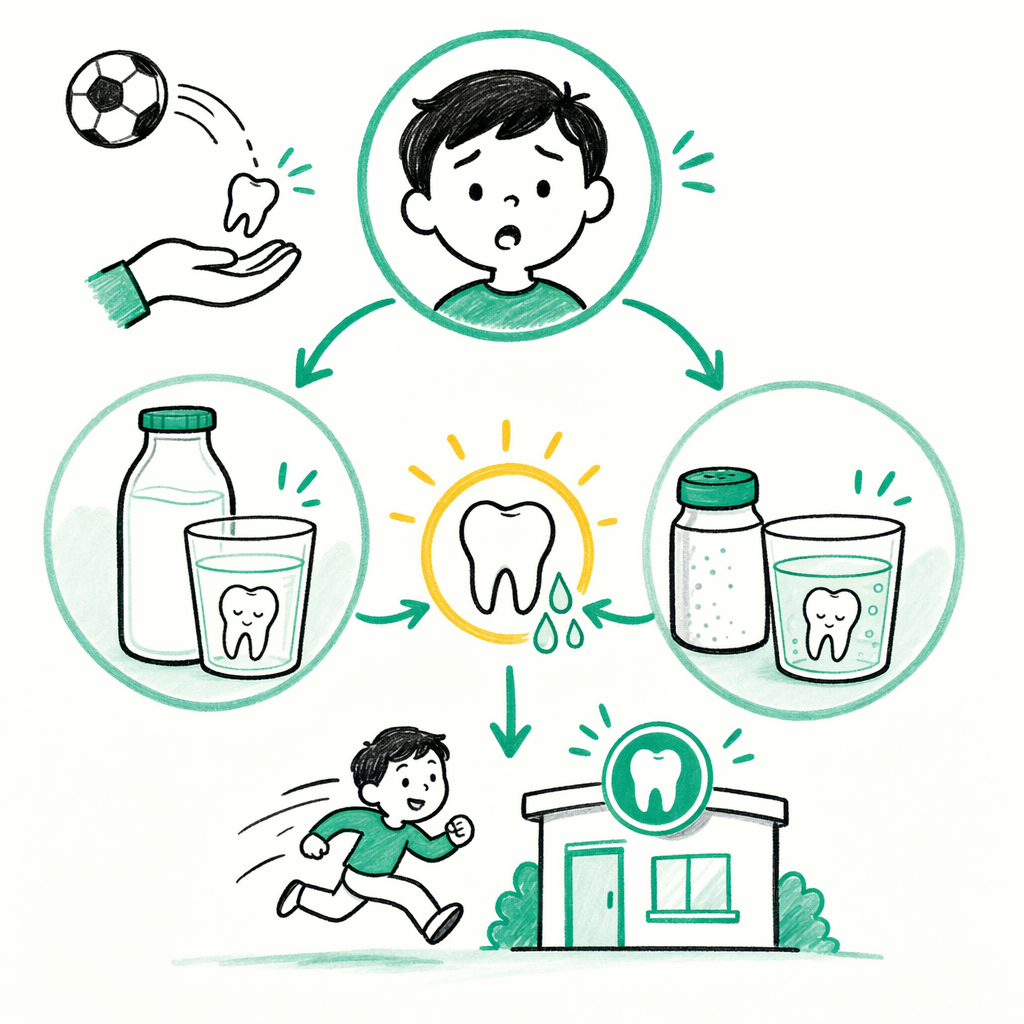
Best quick answer: if a permanent tooth gets knocked out, milk is usually the better choice if you have it. Saline is also reasonable, and the most important thing is to keep the tooth moist and get to a dentist fast.
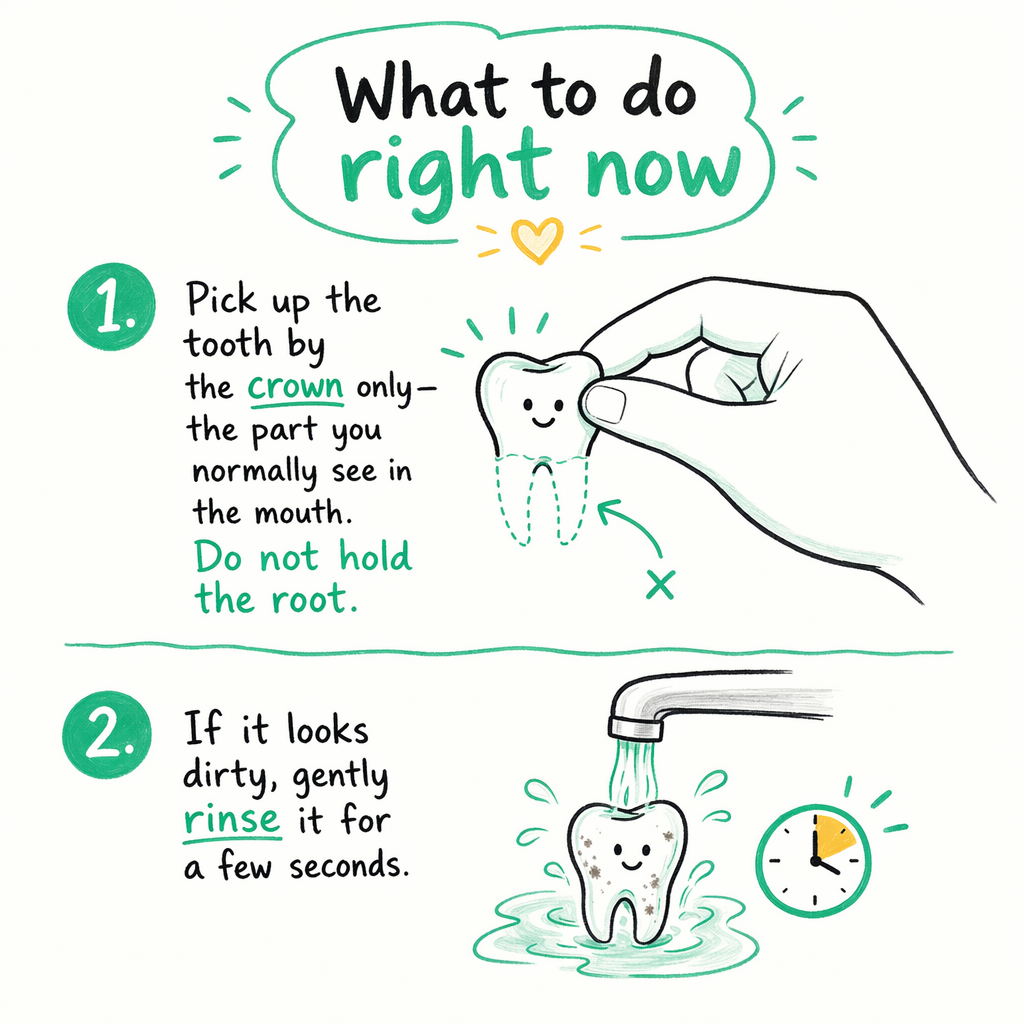
What to do right now
- Pick up the tooth by the crown only — the part you normally see in the mouth. Do not hold the root.
- If it looks dirty, gently rinse it for a few seconds with milk, saline, or clean water. Do not scrub, scrape, or wrap it in tissue.
- If you have milk, place the tooth in milk. If not, saline is also a good option. If neither is available, keep it moist and get to a dentist right away.
- If the tooth is an adult permanent tooth and the person is awake and able to follow directions, some dentists may tell people to place it back in the socket right away. General information only — a licensed dentist should guide that decision.
- Bite gently on clean gauze or a clean cloth if there is bleeding.
- Use a cold compress on the cheek to help with swelling. Over-the-counter pain relief may help if used as directed on the label.
- See a licensed dentist immediately. If you need help finding one, SteadyTooth can help you get matched using contact details only — no medical information needed.
- Call 911 or go to the ER for trouble breathing or swallowing, swelling spreading toward the eye or neck, or uncontrolled bleeding.
Milk vs saline: which is better?
Short answer: milk is often the first choice at home because it is common, easy to find, and helps protect the tooth for a short time. Saline is also a good option, especially if it is sterile saline and already nearby.
Both are mainly used to keep the tooth from drying out before a dentist sees it. A knocked-out tooth should not be left dry on a counter, in a pocket, or wrapped in paper.
If milk is available quickly, many dentists and first-aid guides prefer it over plain water. If saline is what you have, use saline. The bigger issue is speed: keep the tooth moist and get dental care as soon as possible.
This is general information only, not dental advice or a diagnosis.
Why milk is often recommended
Milk is gentle on the outside of the tooth and helps keep important surface cells from drying out too fast. It is also easy for many people to find at home, at work, or at a store nearby.
Cold milk is fine. Whole, low-fat, or other common cow's milk options are generally mentioned in first-aid guidance. If all you have is milk, use it rather than waiting around for something "better."
Do not soak the tooth for hours and assume that solves the problem. Storage helps for a short time, but a licensed dentist still needs to see the tooth urgently.
When saline makes sense
Saline is a reasonable storage liquid if you have it right away, such as contact-lens saline or medical saline. It can help keep the tooth moist without the harsh effect plain water may have over time.
But saline is not magic, and it is not worth delaying care to go search for it if milk is already in front of you. Use what you have fastest, keep the tooth moist, and head to a dentist.
If the only liquid available is clean water, a very quick gentle rinse to remove dirt may be better than scrubbing. But for storage, milk or saline is usually preferred over water.
A few important mistakes to avoid
Do not touch the root unless you absolutely have to. Do not scrub the tooth with a brush, cloth, or soap. Do not use alcohol, peroxide, or disinfectants on it.
Do not let the tooth dry out. Do not wrap it in dry tissue or napkins. Do not put it in your pocket.
Also, this guidance is usually about a permanent adult tooth. Baby teeth are different. If a child's tooth was knocked out, a licensed dentist should guide the next step. You can learn more about urgent dental problems on our symptoms page.
- Handle the crown, not the root
- Keep it moist
- Get dental care fast
Getting help fast
A knocked-out tooth is one of the clearest reasons to seek emergency dental care right away. Quick care matters. We are not a dentist or clinic, and we cannot give personal dental advice, but we can help connect you with an emergency dentist near you.
SteadyTooth is a free service for people in the United States, including new immigrants and non-native English speakers. If you use our form, it asks for contact details only — no medical information needed.
If you're worried about cost, emergency dental prices vary by case, dentist, and city. Coverage and rules also vary by state. You can read more on our costs page or go to help for simple next steps.
Use milk if you have it, saline if you do not, keep the knocked-out tooth moist, and get to a dentist immediately.
SteadyTooth is a free matching service, not a dental provider or medical service, and does not give medical or dental advice or a diagnosis. The information here is general and educational. In a life-threatening emergency — trouble breathing or swallowing, swelling spreading toward the eye or neck, or uncontrolled bleeding — call 911 or go to the nearest emergency room. Costs and care vary by case, dentist, city, and state; always confirm details directly with a licensed dentist.
Common questions
Is milk better than saline for a knocked-out tooth?
Often, yes — mainly because milk is commonly available and is widely recommended for short-term storage. Saline is also a reasonable choice. The key is to keep the tooth moist and get to a licensed dentist immediately.
Can I store a knocked-out tooth in water?
Plain water is usually not the preferred storage liquid. A brief gentle rinse to remove dirt may be okay, but milk or saline is generally better for storage until a dentist sees the tooth.
What if I have no milk or saline?
Keep the tooth moist as best you can and go to a dentist right away. Avoid letting it dry out, and do not scrub or wrap it in dry tissue.
Should I put the tooth back in the socket myself?
Sometimes that is discussed for a permanent adult tooth, but it depends on the situation and should be guided by a licensed dentist when possible. This page gives general information only, not personal dental advice.
What about a baby tooth that got knocked out?
Baby teeth are handled differently. A licensed dentist should guide what to do next. If there is trouble breathing or swallowing, swelling spreading toward the eye or neck, or uncontrolled bleeding, call 911 or go to the ER.
Can SteadyTooth tell me what treatment I need?
No. We are not a dentist, clinic, or medical provider. We give general information and can help connect you with an emergency dentist using contact details only — no medical information needed.
Related help
Quick answers for dental emergencies
Short, plain-language answers to the questions people ask in a dental emergency — tooth pain, knocked-out and broken teeth, swelling, cost, and finding care fast.
Keep readingFind your symptom and what to do right now
Pick what's happening — severe tooth pain, a knocked-out or broken tooth, swelling or an abscess, bleeding — and get calm, plain-language steps plus a free way to find an emergency dentist.
Keep readingFind an emergency dentist near you — free
Tell us your city and how to reach you and we'll connect you, free, with an emergency dentist near you. Contact details only — no medical information needed.
Keep reading