Is a toothache a dental emergency?
Sometimes yes. A toothache can be a dental emergency if the pain is severe, keeps getting worse, or comes with swelling, fever, bleeding, or injury. This is general information only, not dental advice.
Short answer
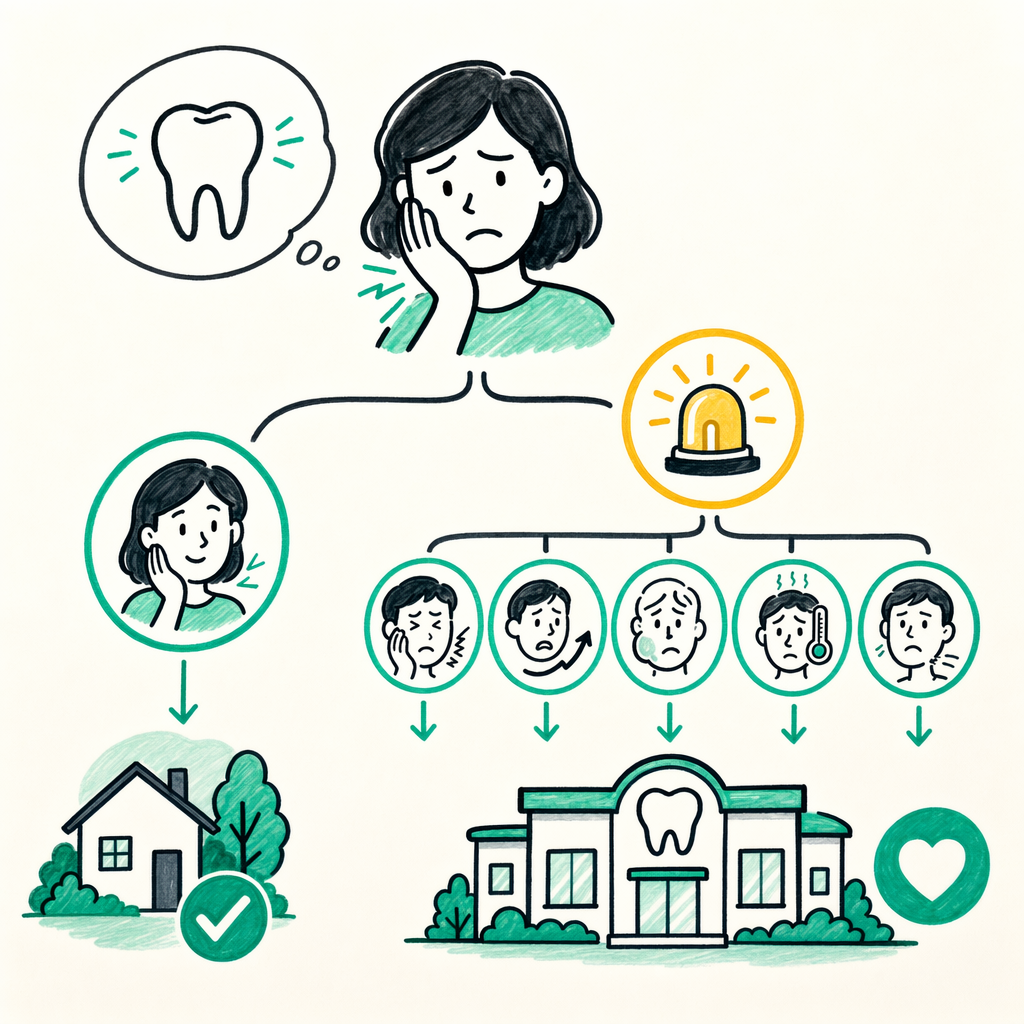
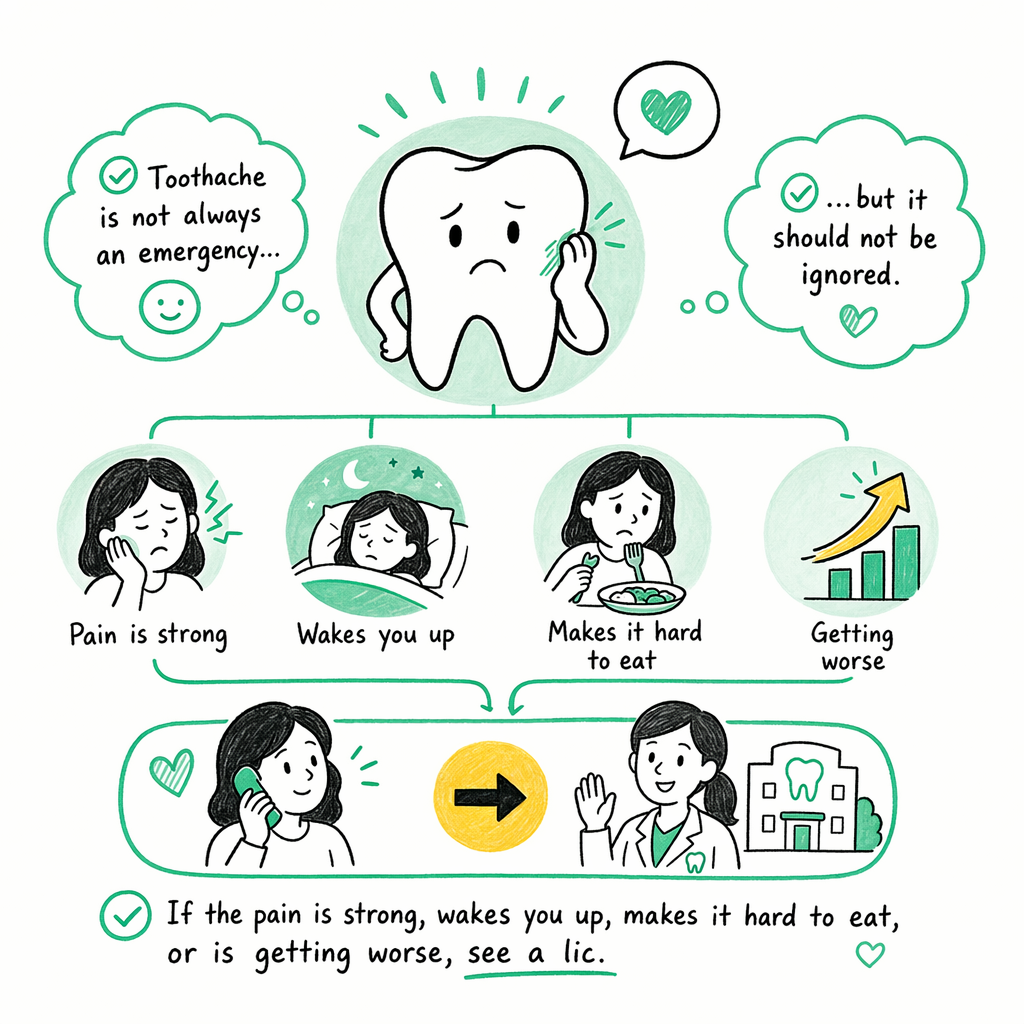
A toothache is not always an emergency, but it should not be ignored.
If the pain is strong, wakes you up, makes it hard to eat, or is getting worse, see a licensed dentist as soon as you can. If you also have swelling, fever, a bad taste in your mouth, pus, or pain after an injury, treat it as urgent.
If you have trouble breathing or swallowing, swelling spreading toward the eye or neck, or bleeding that will not stop, call 911 or go to the ER right away.
SteadyTooth is a free service that helps people in the United States look for an emergency dentist near them. If you use our form, it asks for contact details only — no medical information needed.
When a toothache is more likely to be an emergency
A toothache is more likely to need same-day or after-hours dental care when the pain is severe or does not improve. This can happen with infection, a cracked tooth, a lost filling or crown, an abscess, gum problems, or wisdom tooth trouble. Only a licensed dentist can examine you and tell you what is going on.
Get urgent dental help if the pain is throbbing, constant, or makes it hard to sleep. Also act quickly if your face or gums are swollen, the area is warm, you have a foul taste or drainage, or biting down causes sharp pain.
If a toothache started after a fall, blow to the mouth, or broken tooth, do not wait too long. Dental injuries can get worse if they are not checked.
For more help with urgent dental problems, you can visit symptoms or help.
When it may be urgent, but not 911
Some toothaches need prompt dental care, even if they are not life-threatening.
Examples include pain that lasts more than a day or two, sensitivity that is getting stronger, swelling in the gums, pain with chewing, a chipped or cracked tooth with pain, or a lost filling or crown that leaves the tooth exposed.
A dentist may still want to see you soon because tooth pain often does not go away on its own. Waiting can sometimes lead to more pain, infection, or a more complicated visit later.
What you can do while you wait to see a dentist
You can take simple steps to stay more comfortable until you are seen. These are general self-care steps, not a diagnosis or treatment plan.
- Rinse gently with warm salt water.
- Put a cold compress on the outside of your cheek for short periods.
- Keep the area as clean as you can with gentle brushing.
- Avoid very hot, very cold, or very sugary foods if they make the pain worse.
- Use over-the-counter pain relief only as directed on the label.
Do not place aspirin directly on the gum or tooth. It can irritate the tissue. Even if the pain eases, you should still see a licensed dentist.
How to tell if you should go to the ER instead
A hospital ER is usually not the best place for routine tooth pain, but it is the right place for true emergencies.
Call 911 or go to the ER if you have trouble breathing or swallowing, swelling spreading toward the eye or neck, or uncontrolled bleeding. Those signs can be serious.
If you have facial swelling with feeling very unwell, get emergency help right away. After that, you will still need follow-up with a licensed dentist.
How SteadyTooth can help
If you think you need urgent dental care, get matched and we can help you look for a dentist near you who may have same-day or after-hours availability. SteadyTooth is free for the reader.
The form asks for contact details only — no medical information needed. You can share your name, phone, city or ZIP, how soon you need help, and preferred language.
If cost is part of the stress, you can read more at costs. Dental prices, coverage, and rules vary by state, dentist, city, and the care you need.
A toothache can be a dental emergency if it is severe, getting worse, or comes with swelling, fever, injury, or bleeding.
SteadyTooth is a free matching service, not a dental provider or medical service, and does not give medical or dental advice or a diagnosis. The information here is general and educational. In a life-threatening emergency — trouble breathing or swallowing, swelling spreading toward the eye or neck, or uncontrolled bleeding — call 911 or go to the nearest emergency room. Costs and care vary by case, dentist, city, and state; always confirm details directly with a licensed dentist.
Common questions
How do I know if my toothache is serious?
It may be serious if the pain is severe, keeps getting worse, wakes you up, or comes with swelling, fever, drainage, or injury. A licensed dentist needs to examine you to know the cause.
Should I go to the ER for a toothache?
Usually, a dentist is the right place for tooth pain. Call 911 or go to the ER for trouble breathing or swallowing, swelling spreading toward the eye or neck, or bleeding that will not stop.
Can a toothache go away on its own?
Sometimes the pain may ease for a while, but the problem may still be there. It is still a good idea to see a licensed dentist, especially if the pain returns or gets worse.
What can I do tonight if I cannot see a dentist yet?
Rinse with warm salt water, use a cold compress on the cheek, avoid foods that trigger the pain, and use over-the-counter pain relief as directed on the label. These steps may help for now, but you should still see a dentist.
Do I need to explain my dental problem in the SteadyTooth form?
No. The form asks for contact details only — no medical information needed.
Related help
Quick answers for dental emergencies
Short, plain-language answers to the questions people ask in a dental emergency — tooth pain, knocked-out and broken teeth, swelling, cost, and finding care fast.
Keep readingFind your symptom and what to do right now
Pick what's happening — severe tooth pain, a knocked-out or broken tooth, swelling or an abscess, bleeding — and get calm, plain-language steps plus a free way to find an emergency dentist.
Keep readingFind an emergency dentist near you — free
Tell us your city and how to reach you and we'll connect you, free, with an emergency dentist near you. Contact details only — no medical information needed.
Keep reading