Swollen jaw from a tooth infection — what it means
A swollen jaw can happen when a tooth infection spreads into nearby tissue. It needs prompt dental care, and some kinds of swelling are a true emergency.
What it usually means
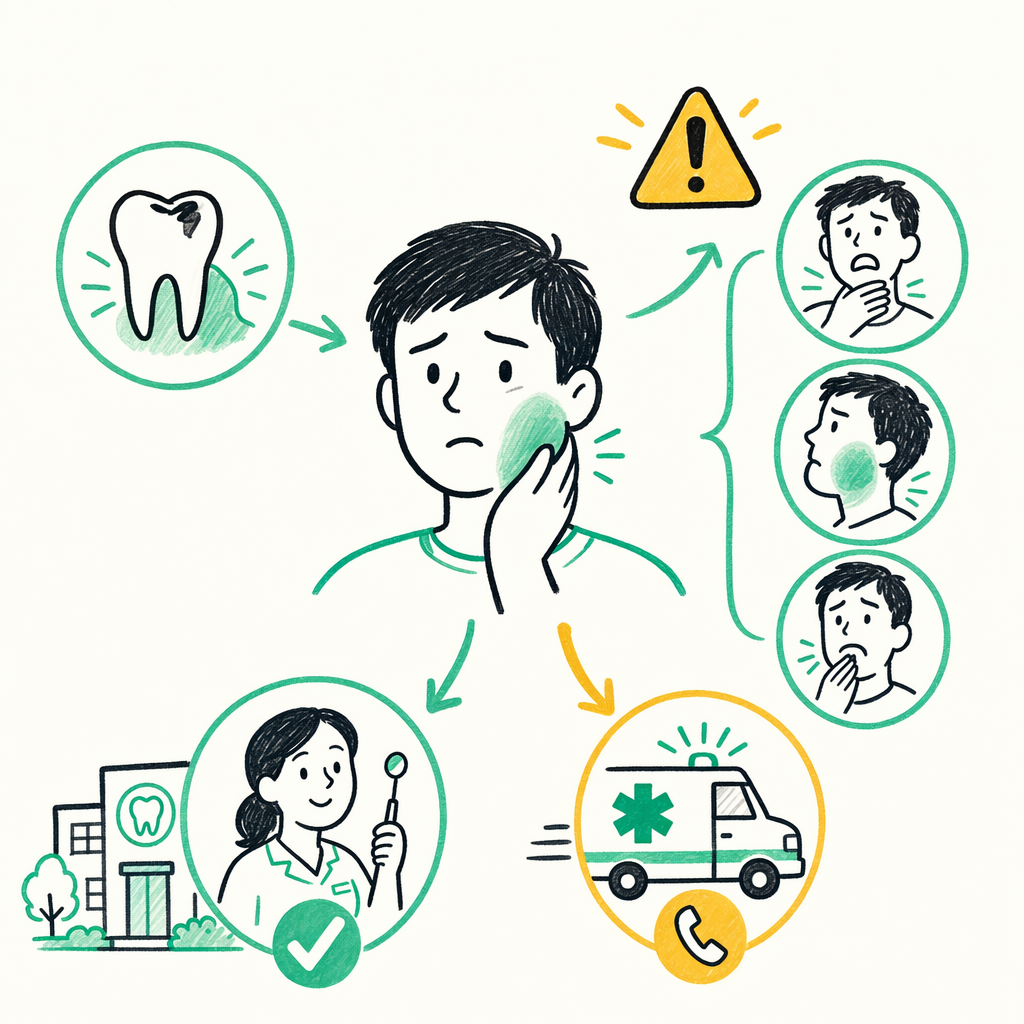
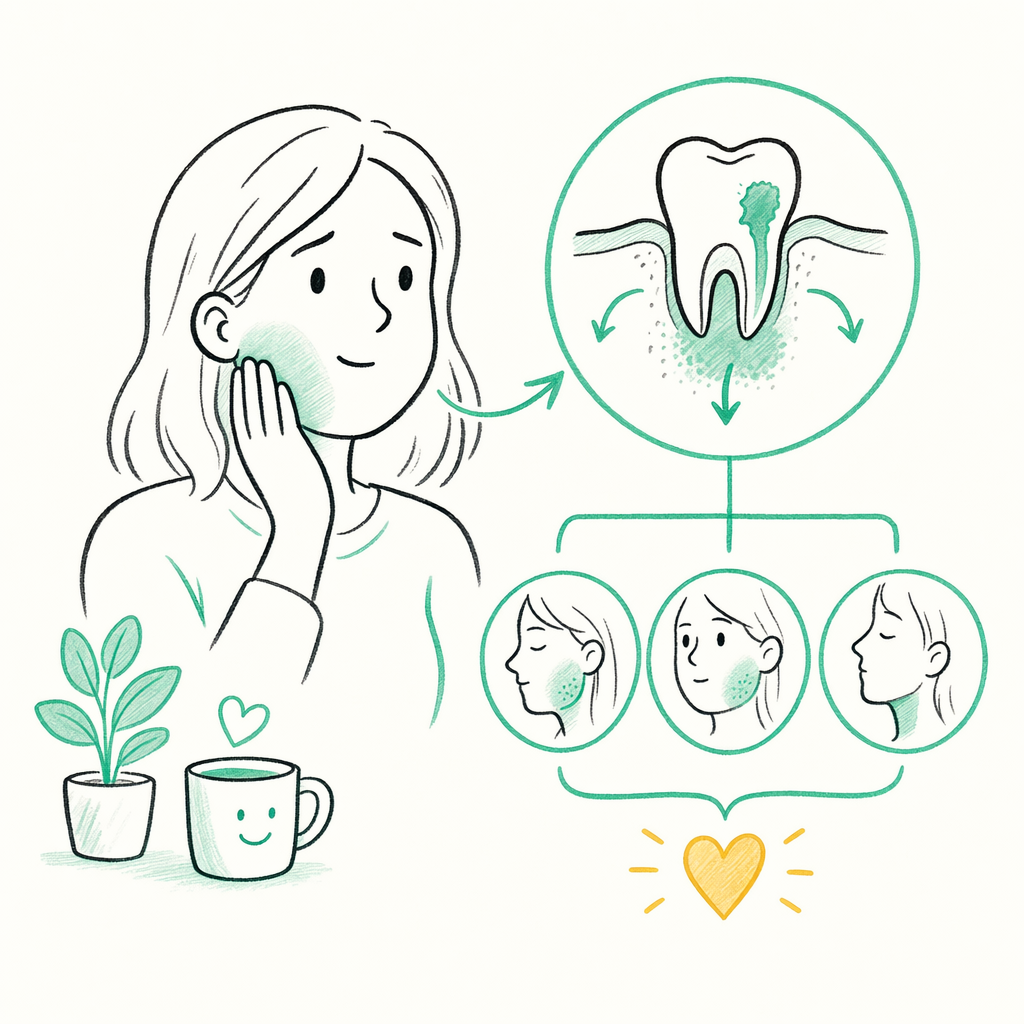
A swollen jaw from a tooth infection often means the infection is no longer limited to the tooth. It may have moved into the gum, cheek, or deeper tissue around the jaw.
This can happen with an abscess, a badly decayed tooth, or a tooth that is cracked or injured. Swelling can come with throbbing pain, a bad taste in the mouth, pus, fever, or trouble opening the mouth.
A dentist needs to examine it. This page is general information only, not a diagnosis or personal dental advice.
When it is an emergency
Some dental swelling can become dangerous because the mouth and jaw are close to the airway and other important areas.
Call 911 or go to the ER now if you have trouble breathing or swallowing, swelling spreading toward the eye or neck, or bleeding that will not stop.
You should also seek urgent dental care as soon as possible if the swelling is getting bigger, you have fever, you feel very weak, or you cannot open your mouth normally. Even if the pain comes and goes, swelling from a tooth infection should not be ignored.
What you can do while you arrange care
The clearest next step is to get seen by a licensed dentist as soon as you can. If you need help finding one, SteadyTooth can help you get matched with a local emergency dentist. The service is free for you, and the form asks for contact details only — no medical information needed.
While you are arranging care, you can rinse gently with warm salt water, use a cold compress on the outside of the cheek, and take over-the-counter pain relief only as directed on the label. Try not to put aspirin on the gum or tooth.
Do not place heat on the face, and do not press on the swelling. Heat and pressure may make things worse. If you notice the swelling moving higher on the face or lower into the neck, treat that as urgent.
Why a dentist still matters even if swelling goes down
Sometimes swelling eases for a while. That does not always mean the problem is gone.
An infected tooth usually needs dental treatment, not just time. Depending on the cause, a dentist may recommend draining an abscess, treating the tooth, or removing it. The right next step depends on the exam and X-rays.
If you wait too long, the infection may return or spread. That is why getting checked matters even if you feel a little better.
How SteadyTooth can help
If you are in the United States and need urgent dental help, SteadyTooth is a free service that helps connect people with an emergency dentist near them, including after-hours options in some areas. It is built to be simple, including for new immigrants and people who are more comfortable in a language other than English.
You share contact intent only: your name, phone, city or ZIP, how soon you need help, and preferred language. No medical information is needed in the form.
If you are worried about cost, dental fees vary by case, dentist, and city. You can read more on our costs page. Coverage and dental rules can also vary by state.
Common questions about jaw swelling and tooth infections
People often hope the swelling will pass on its own. Sometimes symptoms change, but the source of the infection usually still needs treatment.
If you are not sure whether what you have sounds dental, you can also browse more symptom guides. These guides are for general information only and are not a substitute for an exam by a licensed dentist or doctor.
A swollen jaw from a tooth infection can be serious, so get urgent dental care, and go to the ER or call 911 for breathing or swallowing trouble, spreading swelling, or bleeding that will not stop.
SteadyTooth is a free matching service, not a dental provider or medical service, and does not give medical or dental advice or a diagnosis. The information here is general and educational. In a life-threatening emergency — trouble breathing or swallowing, swelling spreading toward the eye or neck, or uncontrolled bleeding — call 911 or go to the nearest emergency room. Costs and care vary by case, dentist, city, and state; always confirm details directly with a licensed dentist.
Common questions
Can a tooth infection make your jaw swell?
Yes. A tooth infection can cause swelling in the gum, cheek, or jaw area when infection spreads into nearby tissue. A dentist should examine it promptly.
Is a swollen jaw from a tooth infection dangerous?
It can be. Call 911 or go to the ER if you have trouble breathing or swallowing, swelling spreading toward the eye or neck, or uncontrolled bleeding.
Will antibiotics alone fix a swollen jaw from an infected tooth?
Only a licensed dentist or doctor can decide what treatment you need. In many cases, the tooth itself still needs dental treatment, so do not assume the problem is solved without being examined.
What can I do at home until I see a dentist?
General self-care may include a warm salt-water rinse, a cold compress on the cheek, and over-the-counter pain relief as directed on the label. These steps do not replace dental care.
Should I go to the ER or a dentist for jaw swelling?
A dentist is usually the right place for a tooth-related infection. But if you have trouble breathing or swallowing, swelling toward the eye or neck, or bleeding that will not stop, go to the ER or call 911.
Do I need to explain my symptoms in the SteadyTooth form?
No. SteadyTooth only asks for contact details only — no medical information needed.
Related help
Quick answers for dental emergencies
Short, plain-language answers to the questions people ask in a dental emergency — tooth pain, knocked-out and broken teeth, swelling, cost, and finding care fast.
Keep readingFind your symptom and what to do right now
Pick what's happening — severe tooth pain, a knocked-out or broken tooth, swelling or an abscess, bleeding — and get calm, plain-language steps plus a free way to find an emergency dentist.
Keep readingFind an emergency dentist near you — free
Tell us your city and how to reach you and we'll connect you, free, with an emergency dentist near you. Contact details only — no medical information needed.
Keep reading