Sudden tooth sensitivity to hot and cold
Sudden sensitivity to hot and cold often means the tooth is irritated or damaged. The clearest next step is to book a licensed dentist soon, and sooner still if the pain is strong or getting worse.
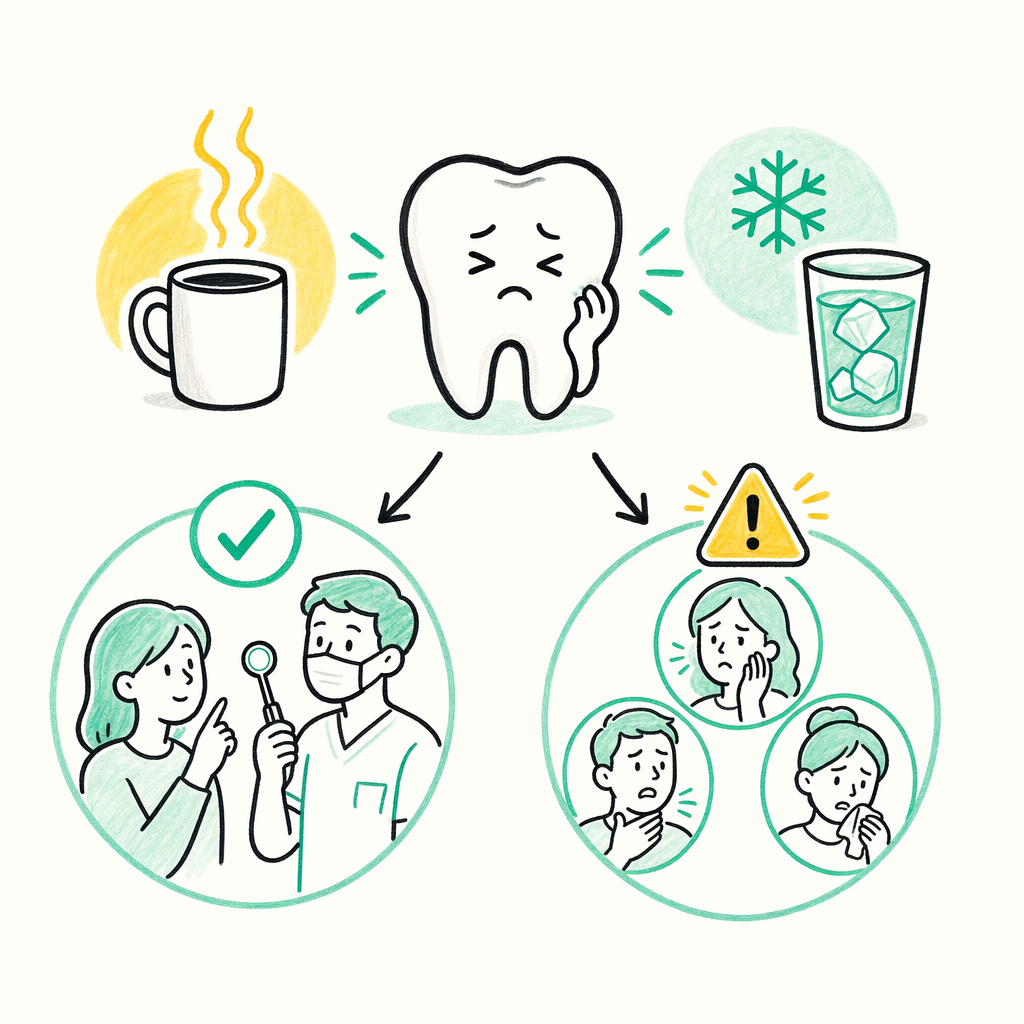
What this usually means
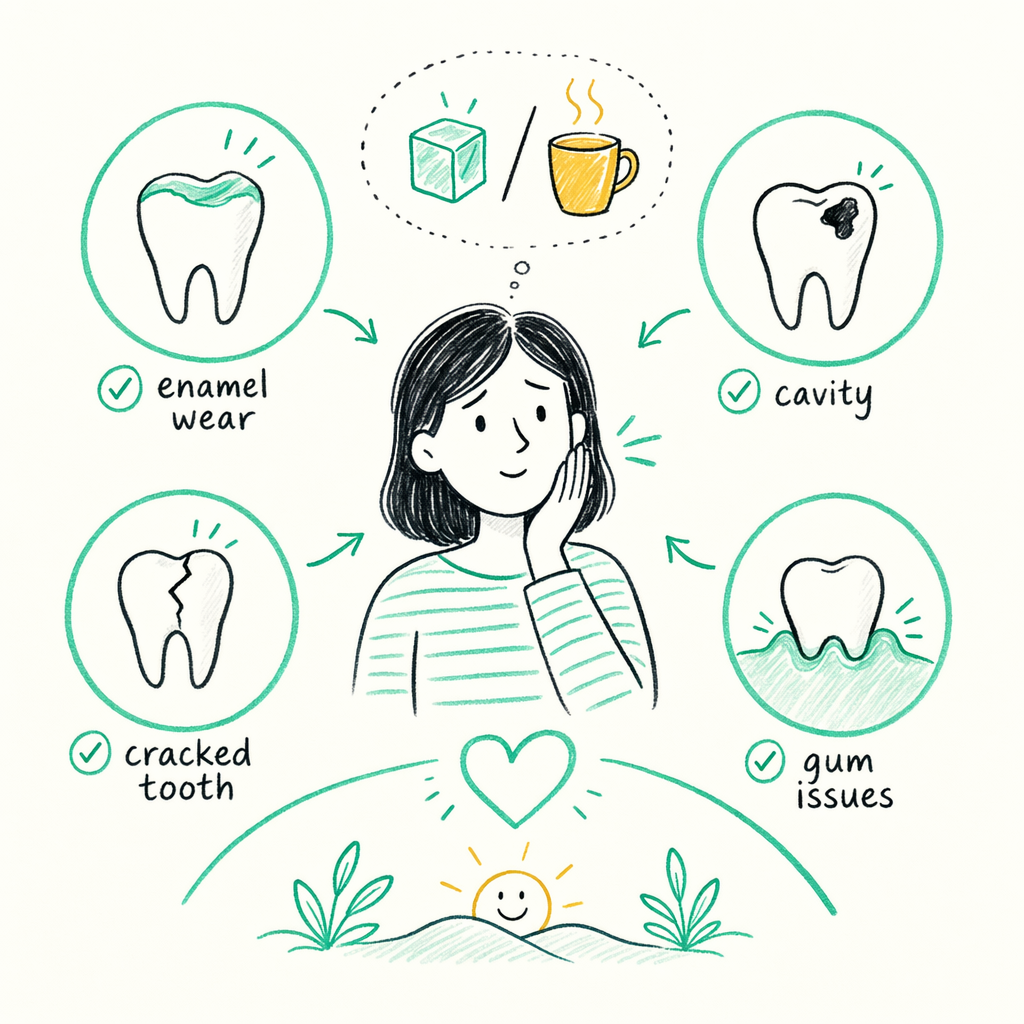
Sudden tooth sensitivity to hot or cold is common, but it is not something to ignore. It can happen when a tooth has enamel wear, a cavity, a cracked tooth, gum recession, or a problem inside the tooth.
This page is general information only. It cannot tell you the cause, and it cannot replace an exam by a licensed dentist. If the sensitivity is new, one-sided, or sharp, it is worth getting checked.
If you are also dealing with swelling, bleeding, or severe pain, look at our symptom help page or get help finding care through Get Matched.
What to do next
- Make an appointment with a licensed dentist as soon as you can.
- Until you are seen, avoid very hot, very cold, or sugary drinks and foods if they trigger pain.
- Use a soft toothbrush and brush gently.
- If you need help finding someone open today, use our free help page to start a search.
- If the sensitivity came after a hit, crack, or bite injury, tell the dentist that when you call. You do not need to write it out here on this page.
SteadyTooth is free for readers. We only collect contact details only — no medical information needed.
When it could be urgent
Some tooth problems need same-day care. Call 911 or go to the ER now if you have trouble breathing or swallowing, swelling spreading toward the eye or neck, or uncontrolled bleeding.
If the pain is severe, if the tooth looks broken, or if swelling is starting, a dentist should see you quickly. A dentist can check whether the tooth needs urgent treatment, but this page cannot diagnose the cause.
If you are not sure where to go, a licensed dentist is still the right first call for most tooth pain.
Simple self-care while you wait
You can take a few basic steps to stay more comfortable while you look for care.
Rinse gently with warm salt water. Use a cold compress on the cheek if the area feels sore. If a tooth was knocked out, save it in milk and get dental help right away. Over-the-counter pain relief may help if you can take it safely and as directed on the label.
Do not put heat on a swollen face. Do not ignore worsening pain, and do not assume the problem will pass on its own.
Cost and coverage
Cost can vary by city, dentist, and what the exam shows. Some people need only an exam and X-rays. Others may need more treatment, which changes the price.
Dental coverage and rules vary by state. If you want a rough idea before you call, see our costs page. SteadyTooth does not charge the reader for matching help.
If you are new to the United States or nervous about calling, we can help you move step by step.
Sudden hot-and-cold tooth sensitivity is a sign to see a licensed dentist soon, and get emergency help right away if there is swelling, trouble swallowing, or uncontrolled bleeding.
SteadyTooth is a free matching service, not a dental provider or medical service, and does not give medical or dental advice or a diagnosis. The information here is general and educational. In a life-threatening emergency — trouble breathing or swallowing, swelling spreading toward the eye or neck, or uncontrolled bleeding — call 911 or go to the nearest emergency room. Costs and care vary by case, dentist, city, and state; always confirm details directly with a licensed dentist.
Common questions
Why do my teeth suddenly hurt with hot or cold drinks?
Sudden hot-and-cold sensitivity can happen when the tooth surface is worn, the gum has pulled back, there is a cavity, or the tooth is cracked. A licensed dentist needs to examine it to know the cause.
Can I wait and see if it goes away?
Mild sensitivity sometimes settles down, but new or sudden pain is worth a dental visit. If it is severe, getting worse, or comes with swelling, do not wait.
Should I go to a dentist or the ER?
For most tooth sensitivity, a dentist is the right place to start. Go to the ER or call 911 for trouble breathing or swallowing, swelling spreading toward the eye or neck, or uncontrolled bleeding.
Do I need to send my symptoms to use SteadyTooth?
No. We only collect contact details only — no medical information needed. We use that to help connect you with care.
Related help
Quick answers for dental emergencies
Short, plain-language answers to the questions people ask in a dental emergency — tooth pain, knocked-out and broken teeth, swelling, cost, and finding care fast.
Keep readingFind your symptom and what to do right now
Pick what's happening — severe tooth pain, a knocked-out or broken tooth, swelling or an abscess, bleeding — and get calm, plain-language steps plus a free way to find an emergency dentist.
Keep readingFind an emergency dentist near you — free
Tell us your city and how to reach you and we'll connect you, free, with an emergency dentist near you. Contact details only — no medical information needed.
Keep reading