Emergency root canal for an infected tooth
Bad tooth pain, swelling, or a painful abscess can feel overwhelming fast. An emergency root canal may help save the tooth and relieve pressure, but the next step is to contact a licensed dentist right away.
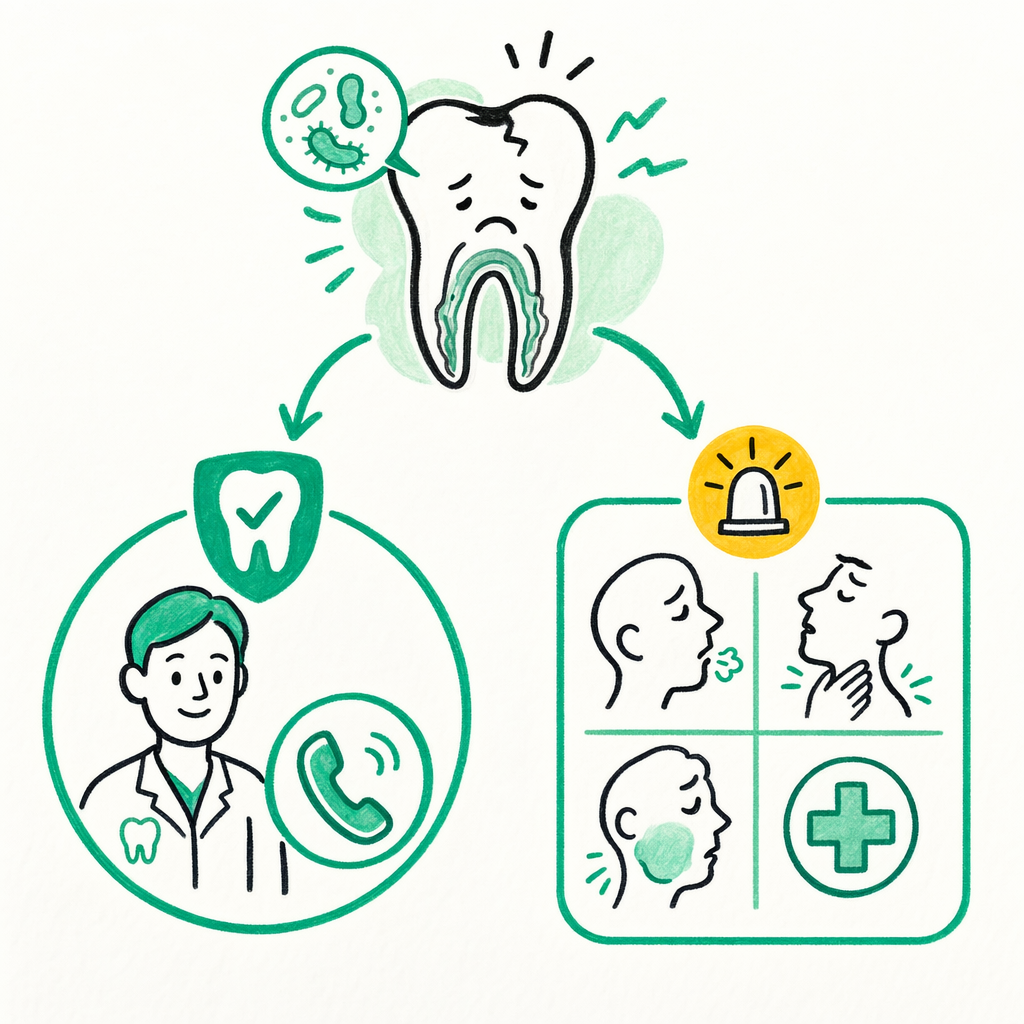
What an emergency root canal is
An emergency root canal is urgent dental treatment for a tooth with deep infection or severe inflammation inside the tooth. The goal is to remove infected or damaged tissue, clean the inside of the tooth, and help stop the pressure and pain.
This is general information only, not a diagnosis or personal dental advice. A licensed dentist needs to examine you and decide whether a root canal, extraction, drainage, or another treatment is the right next step.
If you have trouble breathing or swallowing, swelling spreading toward the eye or neck, or bleeding that will not stop, call 911 or go to the ER now. Those are true emergencies.

When someone may need it
People often look for an emergency root canal when they have severe tooth pain, pain that keeps them awake, pain with biting, swelling in the gums or face, a bad taste or drainage near a tooth, or a tooth that feels very sensitive to hot or cold. Sometimes an abscessed or badly infected tooth causes throbbing pain that seems to spread into the jaw, ear, or head.
A dentist may recommend urgent care if the nerve inside the tooth is infected or if infection has built up around the root. In some cases, the tooth can be saved with root canal treatment. In other cases, the dentist may recommend different treatment first.
If you are not sure whether your symptoms sound urgent, you can review common symptoms and then try to get matched with a nearby dentist. SteadyTooth is a free service for readers, and we only ask for contact details only — no medical information needed.
What to expect at the visit
The first step is usually an exam and dental X-rays. The dentist checks where the pain is coming from, whether there is swelling or infection, and whether the tooth is restorable. Because this is healthcare-adjacent information, it is important to say clearly: only a licensed dentist can tell you what treatment you need.
If a root canal is the plan, the dentist numbs the area, opens the tooth, removes the damaged tissue inside, cleans the canals, and places medicine or a filling material inside. Sometimes the full root canal is completed in one visit. Sometimes the dentist does the urgent part first to relieve pressure and control infection, then finishes treatment later.
Afterward, many people need a filling or crown to protect the tooth. The exact plan depends on the tooth, how much damage there is, and what the dentist sees on the exam.
What you can do while you look for care
If you are trying to get through the next few hours, keep things simple and safe. Rinse gently with warm salt water. Use a cold compress on the cheek for swelling. Take over-the-counter pain relief only as directed on the label. Then arrange care with a dentist as soon as you can.
Do not place aspirin on the gum or tooth. Do not try to drain swelling yourself. Do not ignore fast-growing swelling or fever.
If you need help finding urgent care, start with our emergency dental services or get matched for help connecting with a dentist near you. We only collect contact intent details such as your name, phone, city or ZIP, how soon you need care, and preferred language.
How much an emergency root canal may cost
Costs vary a lot by tooth, city, the dentist, whether X-rays and an exam are needed, and whether you need a crown afterward. In the United States, an emergency exam and X-rays may be a separate charge. A root canal itself often costs a few hundred to over a thousand dollars, and a crown can add more.
A simple front tooth root canal is often less than a molar root canal, because back teeth are usually harder to treat. If there is significant infection, after-hours care, or follow-up work, the total may be higher. Dental coverage, payment rules, and emergency benefits can also vary by state.
For a broader look at typical ranges, visit costs. No one should promise your exact price before an exam, but it is reasonable to ask the office about visit fees, payment options, and whether the exam cost is separate.

How to find a dentist fast
When pain is severe, the clearest next step is to contact an emergency dentist now and ask about the soonest available exam. If you are looking late at night, on a weekend, or in a new city, SteadyTooth can help you look for a same-day or after-hours dental office near you.
Use get matched and send contact details only — no medical information needed. Share your name, phone number, city or ZIP, how soon you need care, and preferred language. We are not a dentist or clinic, and we do not give medical advice. We help people connect with local dental offices.
If your symptoms become dangerous on the way, do not wait for a dental callback. Trouble breathing or swallowing, swelling spreading toward the eye or neck, or uncontrolled bleeding means call 911 or go to the ER.
If you think a tooth infection may need an emergency root canal, contact a licensed dentist now, and go to the ER for breathing trouble, swallowing trouble, spreading swelling, or bleeding that will not stop.
SteadyTooth is a free matching service, not a dental provider or medical service, and does not give medical or dental advice or a diagnosis. The information here is general and educational. In a life-threatening emergency — trouble breathing or swallowing, swelling spreading toward the eye or neck, or uncontrolled bleeding — call 911 or go to the nearest emergency room. Costs and care vary by case, dentist, city, and state; always confirm details directly with a licensed dentist.
Common questions
Can an emergency root canal stop tooth pain right away?
It may reduce pressure and address the source of pain, but every case is different. Only a licensed dentist can examine the tooth and tell you whether a root canal is appropriate and what relief to expect.
Do I need a root canal if I have an abscess?
Maybe, but not always. An abscess or infected tooth needs prompt evaluation by a licensed dentist, who may recommend a root canal, drainage, extraction, or another treatment based on the exam.
Should I go to the ER for an infected tooth?
Go to the ER or call 911 for trouble breathing or swallowing, swelling spreading toward the eye or neck, or bleeding that will not stop. For most tooth infections and dental pain, you still need a dentist as soon as possible.
How fast should I be seen for severe tooth pain and swelling?
As soon as possible, because dental infections can worsen quickly. Try to contact a licensed dentist right away, especially if pain is severe, swelling is increasing, or there is drainage or fever.
What information do I need to send to SteadyTooth?
Only contact details: your name, phone number, city or ZIP, how soon you need care, and preferred language. No medical information is needed.
Will insurance cover an emergency root canal?
Coverage depends on your dental plan, the treatment, and your state. It is best to ask the dental office and your insurer about exam fees, treatment coverage, and any out-of-pocket costs.
Related help
Types of emergency dental care
Same-day visits, after-hours and 24/7 care, tooth extractions, root canals for an abscess, and repairs for broken teeth. Learn what each involves and get matched free with a dentist.
Keep readingFind an emergency dentist near you — free
Tell us your city and how to reach you and we'll connect you, free, with an emergency dentist near you. Contact details only — no medical information needed.
Keep readingWhat an emergency dentist visit really costs
Honest, plain-language cost ranges for an emergency dental visit, extraction, or root canal, plus ways to pay without insurance. Real numbers depend on the problem, dentist, and city.
Keep reading