Bleeding that won't stop — what to do
If bleeding in your mouth is not slowing down, start with pressure now. Most bleeding can be slowed, but heavy bleeding or bleeding that keeps coming needs urgent dental care.
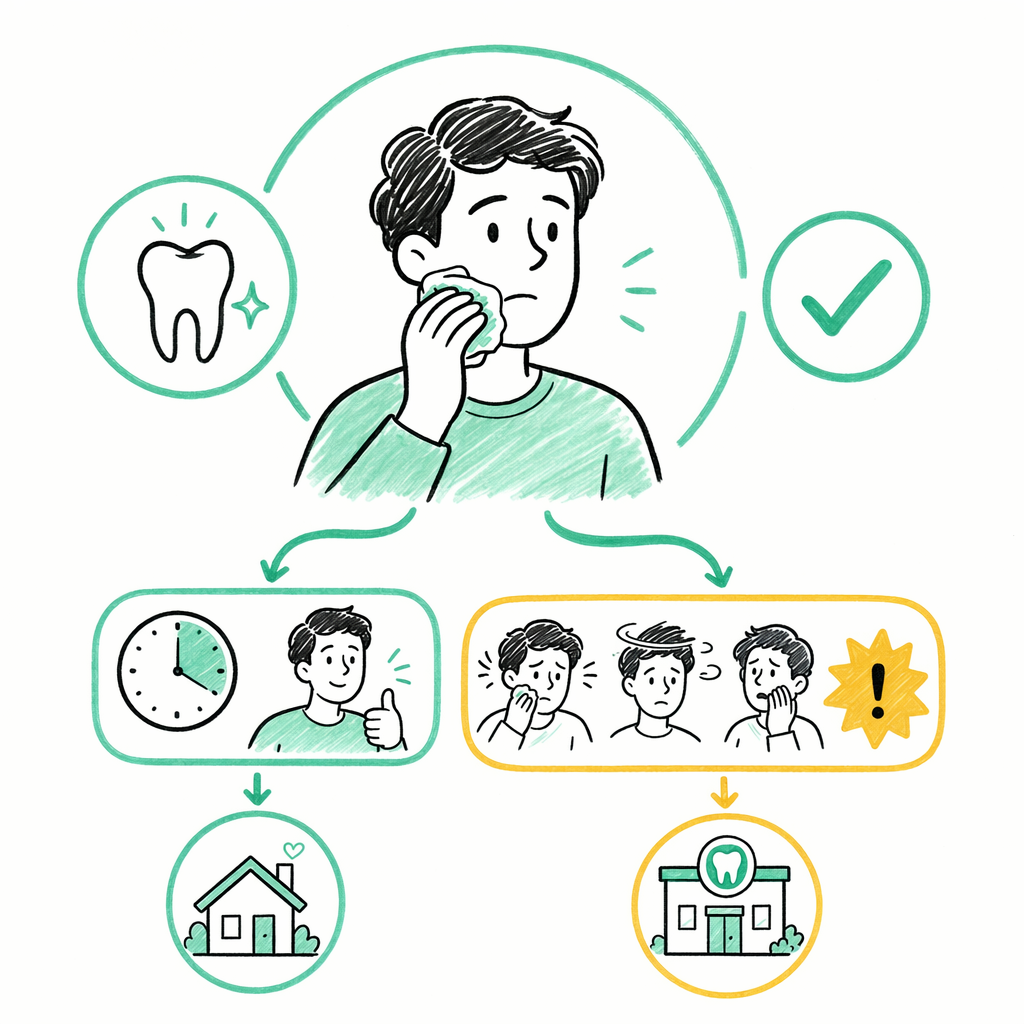
What to do right now
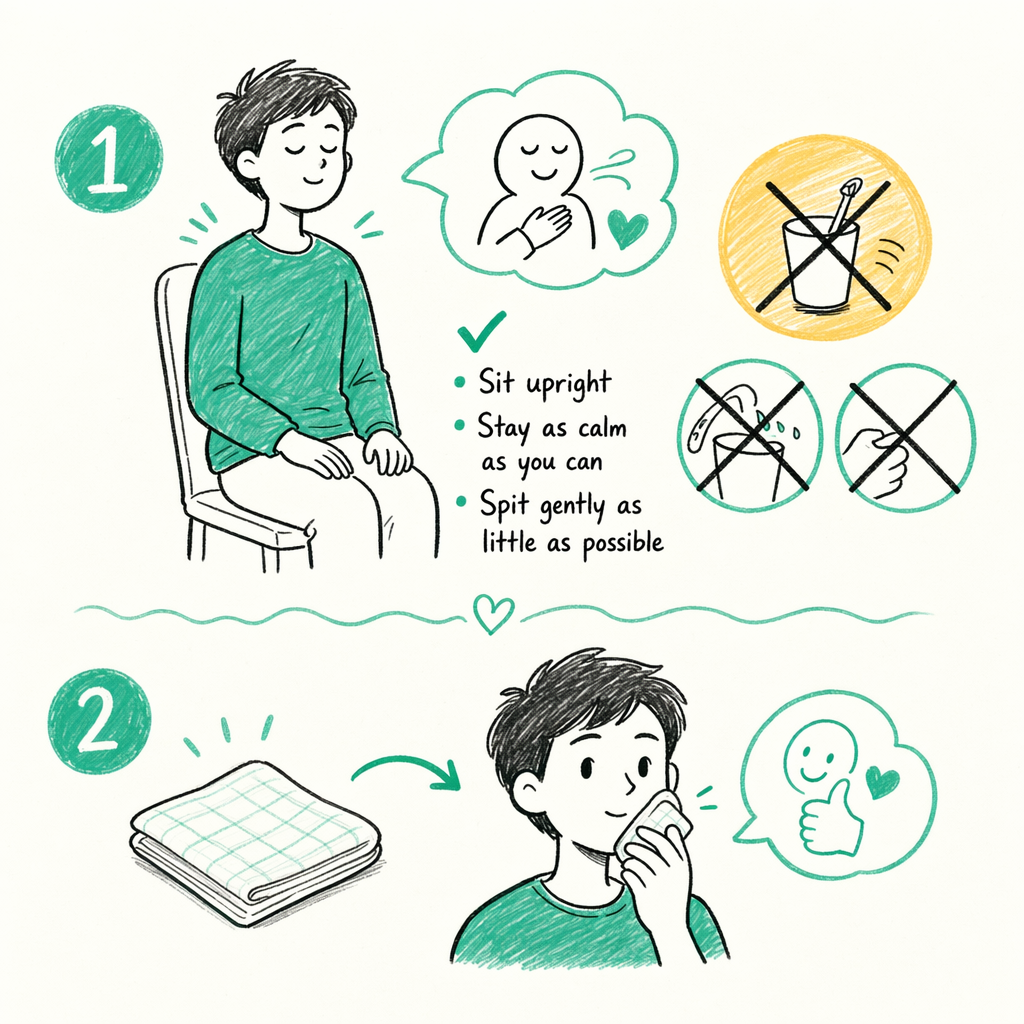
- Sit upright and stay as calm as you can. Spit gently as little as possible. Spitting, rinsing hard, or poking the area can restart bleeding.
- Fold clean gauze or a clean damp cloth, place it over the bleeding area, and bite down with steady pressure for 20 to 30 minutes without checking every minute.
- If you do not have gauze, use a clean cloth. Keep firm pressure in one place. Replace it only if it becomes soaked.
- Put a cold compress or ice pack wrapped in cloth on the outside of your cheek for 10 to 15 minutes at a time.
- Do not smoke, drink through a straw, swish hard, or do heavy activity right now. Those can make bleeding worse.
- If a tooth was just pulled, keep your head raised and follow the dentist's after-care instructions if you have them.
- For pain, you can use over-the-counter pain relief as directed on the label, unless a doctor or dentist has told you not to take it.
- If bleeding is heavy, will not slow after firm pressure, or you feel weak or faint, get urgent help now. If you have trouble breathing or swallowing, swelling spreading toward the eye or neck, or uncontrolled bleeding, call 911 or go to the ER.
When this is an emergency
Some mouth bleeding can wait a little while if it is light and stops with pressure. Bleeding that keeps going is different. It needs attention from a licensed dentist, and sometimes a doctor or the ER.
Get urgent dental care today if bleeding continues after 20 to 30 minutes of steady pressure, starts again over and over, or follows a broken tooth, knocked-out tooth, injury, or dental procedure.
Call 911 or go to the ER now for true emergencies: trouble breathing or swallowing, swelling spreading toward the eye or neck, or uncontrolled bleeding. Also seek immediate care if you feel faint, cannot keep pressure on the area, or the bleeding is from a major injury.
SteadyTooth is not a dentist or medical provider. We share general information only. A licensed dentist needs to examine the cause.
What may be causing it
Bleeding from the mouth can happen after a tooth is pulled, after dental work, from a cut on the gums, from a broken tooth, or after being hit in the mouth. Sometimes inflamed gums bleed easily too.
What matters most tonight is not naming the cause yourself. What matters is slowing the bleeding and getting checked if it does not stop.
If you also have severe tooth pain, a loose or knocked-out tooth, facial swelling, or signs of infection, see a dentist as soon as possible. You can also browse other urgent dental emergency symptoms if you are not sure what fits best.
How to find urgent dental care
If the bleeding is not a 911-level emergency, the next step is to find a licensed dentist who can see urgent cases. A same-day or after-hours office may be able to help, depending on where you are and who is available.
SteadyTooth is a free service for people in the United States, especially if English is not your first language. We can help you look for a same-day emergency dentist near you.
If you want help, use get matched. Share contact details only — no medical information needed. We only ask for things like your name, phone, city or ZIP, how soon you want care, and preferred language.
We cannot promise a specific dentist, price, or wait time. Dental coverage and rules can also vary by state.
What it may cost
The cost depends on what is causing the bleeding, what treatment is needed, the dentist, and your city. An urgent exam may cost less than treatment for a broken tooth, stitches, or other injury care.
If the bleeding happened after a recent procedure, contact that dental office if you can. If you need a different urgent dentist, ask about the exam fee and likely cost range before you go.
You can read more on our costs page. It is always free for you to use SteadyTooth to look for help.
While you wait to be seen
Keep steady pressure on the area if it is still oozing. Rest with your head elevated. Use a cold compress on the cheek.
Avoid hot drinks, alcohol, smoking, straws, hard rinsing, and exercise until a dentist tells you it is safe. Try not to touch the area with your fingers or tongue.
If the bleeding gets heavier instead of lighter, or you develop trouble breathing or swallowing, swelling spreading toward the eye or neck, or uncontrolled bleeding, call 911 or go to the ER.
If bleeding in your mouth is not stopping, press on it now, and get urgent dental care if it does not slow quickly or if you have any 911-level warning signs.
SteadyTooth is a free matching service, not a dental provider or medical service, and does not give medical or dental advice or a diagnosis. The information here is general and educational. In a life-threatening emergency — trouble breathing or swallowing, swelling spreading toward the eye or neck, or uncontrolled bleeding — call 911 or go to the nearest emergency room. Costs and care vary by case, dentist, city, and state; always confirm details directly with a licensed dentist.
Common questions
How long should I hold pressure on bleeding in my mouth?
Use firm, steady pressure for 20 to 30 minutes without checking constantly. If it is still bleeding after that, contact an urgent dentist. If the bleeding is heavy or uncontrolled, go to the ER or call 911.
Is bleeding after a tooth extraction normal?
Some light oozing can happen after a tooth is pulled. Heavy bleeding or bleeding that does not slow with firm pressure needs urgent dental attention.
Should I rinse my mouth if it is bleeding?
Gentle rinsing may be fine later, but hard swishing can restart bleeding. If the area is actively bleeding, pressure is usually the first step.
Can SteadyTooth tell me what is causing the bleeding?
No. We are not a dentist or medical provider, and we give general information only. A licensed dentist or doctor needs to examine you.
Do I need to describe my symptoms in the form?
No. We only ask for contact details so we can help with your search — contact details only, no medical information needed.
Is SteadyTooth free to use?
Yes. It is free for the reader to use SteadyTooth to look for urgent dental care.
Related help
Find your symptom and what to do right now
Pick what's happening — severe tooth pain, a knocked-out or broken tooth, swelling or an abscess, bleeding — and get calm, plain-language steps plus a free way to find an emergency dentist.
Keep readingFind an emergency dentist near you — free
Tell us your city and how to reach you and we'll connect you, free, with an emergency dentist near you. Contact details only — no medical information needed.
Keep readingWhat an emergency dentist visit really costs
Honest, plain-language cost ranges for an emergency dental visit, extraction, or root canal, plus ways to pay without insurance. Real numbers depend on the problem, dentist, and city.
Keep reading