Your child has a dental emergency — what to do
Take a breath. Start with a few simple steps, then get your child seen by a licensed dentist as soon as you can. If breathing, swallowing, or heavy bleeding is the problem, go to the ER now.
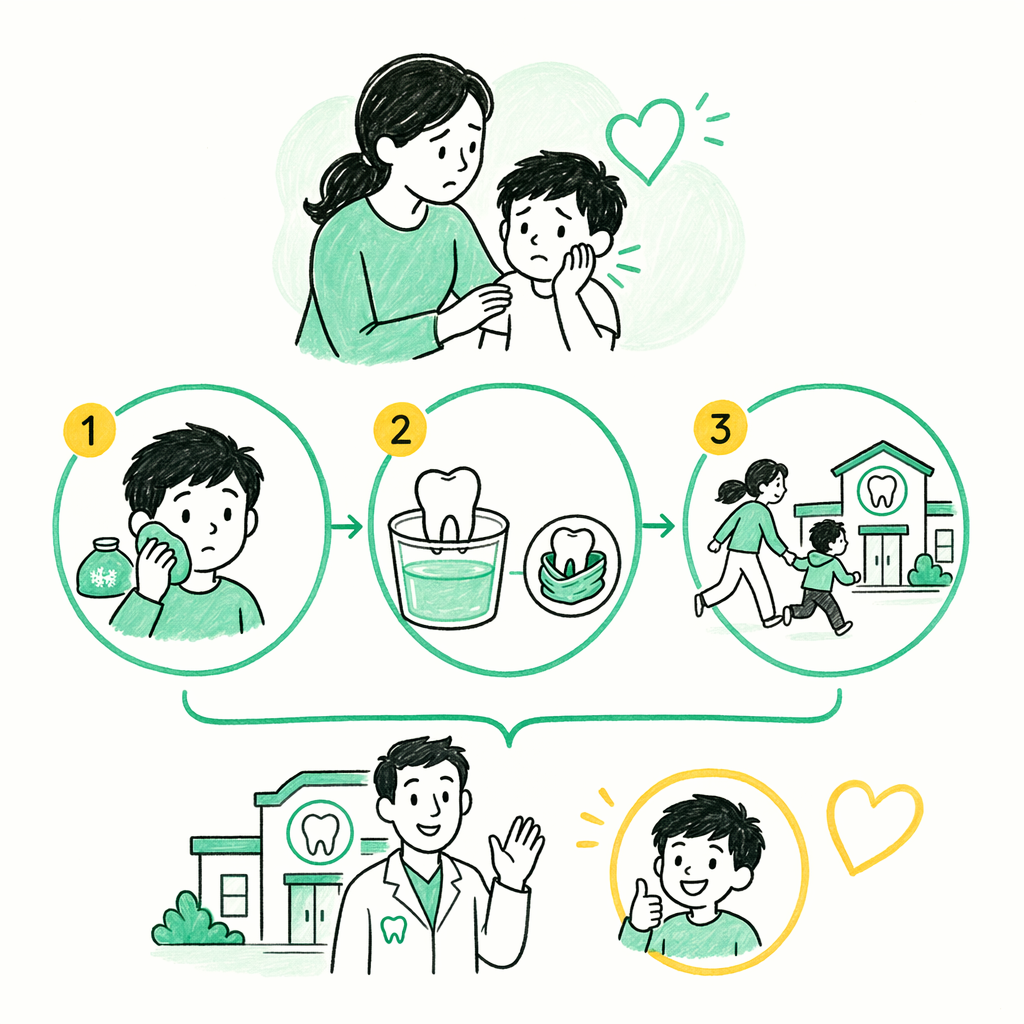
What to do right now
- Stay calm and check the basics first. If your child has trouble breathing or swallowing, swelling moving toward the eye or neck, or bleeding that will not stop, call 911 or go to the ER.
- If there is bleeding in the mouth, fold clean gauze or a clean cloth and press gently. Keep steady pressure. A cold compress on the cheek can help with swelling.
- Rinse the mouth gently with warm salt water if your child is old enough to spit. This can help wash away blood and food.
- If a tooth is knocked out, find it and pick it up by the top part, not the root. If it is a baby tooth, do not try to put it back in. If it may be an adult tooth, place it in milk and get urgent dental care right away.
- If a tooth is broken, save any pieces you can find. Rinse the mouth gently and use a cold compress on the cheek.
- If there is severe tooth pain, swelling, or a pimple-like bump on the gum, call a dentist now. Until your child is seen, you can use over-the-counter pain relief as directed on the label.
- Get your child seen by a licensed dentist as soon as possible. SteadyTooth can help you look for urgent care options near you through same-day emergency dentist support.
When it is an emergency, and when it may be able to wait
Some child dental problems need care the same day. Others may be uncomfortable but can sometimes wait until the next business day. This page is general information only. It is not a diagnosis or personal medical advice.
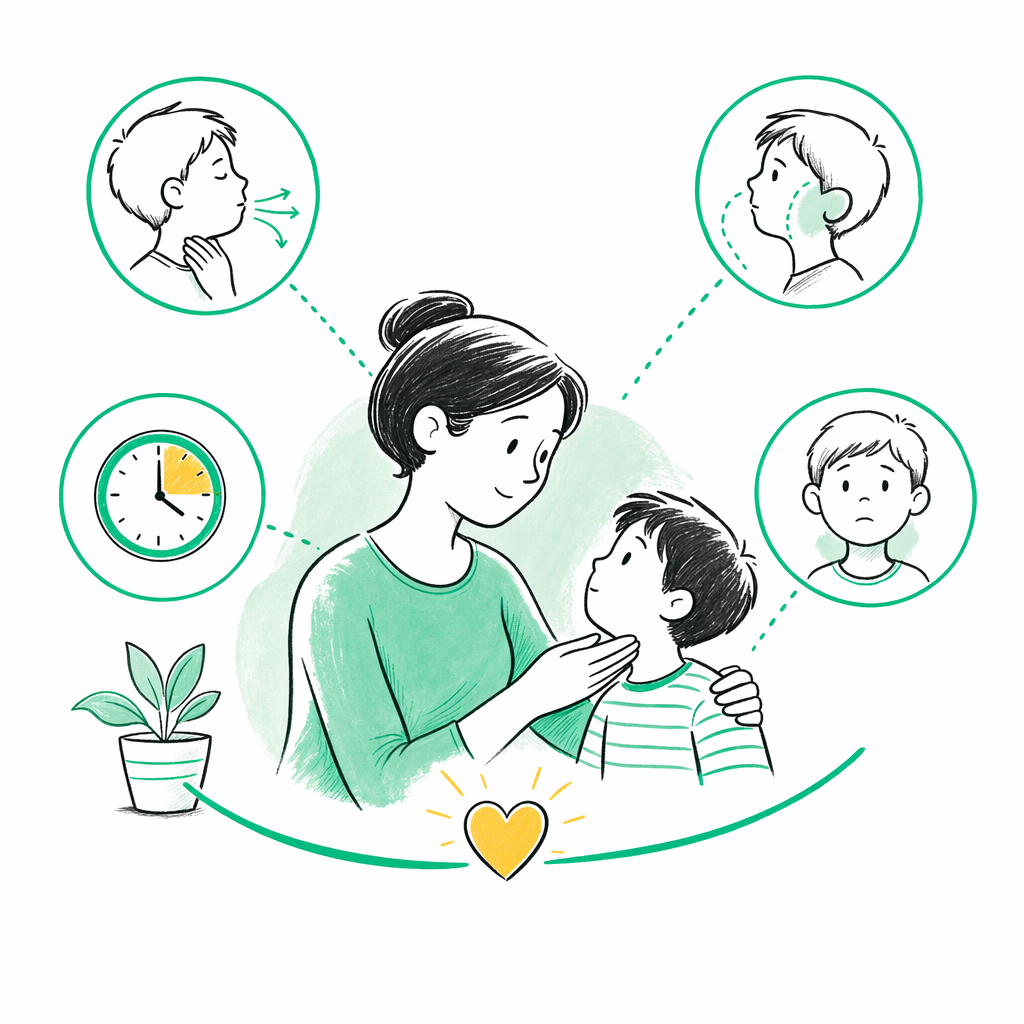
Get urgent dental care now for a knocked-out or loose adult tooth, a broken tooth with pain, strong tooth pain that does not settle, facial swelling, gum swelling with pus, injury after a fall or hit to the mouth, or bleeding that takes a long time to slow down.
Call 911 or go to the ER for the true emergency warning signs: trouble breathing or swallowing, swelling spreading toward the eye or neck, or uncontrolled bleeding. The ER can help with life-threatening problems, but you will still usually need a dentist for the tooth itself.
A small chip with no pain, a lost filling, or mild tooth sensitivity may be less urgent, but it is still smart to arrange a dental visit soon. If you are unsure, start with urgent dental care and ask what is available today.
Baby tooth or adult tooth: why it matters
Children can have both baby teeth and adult teeth, depending on age. That changes what a dentist may do after an injury.
A knocked-out baby tooth is usually not put back into the mouth. A dentist should still check the area, make sure no piece is left behind, and look for damage to nearby teeth or the gums.
A knocked-out adult tooth is more urgent. Time matters. Handle it gently by the top part only, place it in milk, and get to a licensed dentist right away.
If you are not sure whether the tooth is a baby tooth or an adult tooth, do not guess. Save the tooth if you have it and seek urgent dental care.
How to find urgent dental care for your child
If your child needs help fast, look for a licensed dentist who can see dental emergencies today or after hours. You can start with urgent care options or request help through get matched.
SteadyTooth is a free service for people in the United States. We help connect people with emergency dental options near them. We are not a dentist, clinic, or medical provider, and we do not give treatment advice.
If you use our form, it asks for contact details only — no medical information needed. That means basics like name, phone, city or ZIP, how soon you need help, and preferred language.
Coverage, clinic rules, and referral options can vary by state. If you already have a family dentist, call them too. Many offices have after-hours instructions on their voicemail.
What it may cost
The cost of a child dental emergency can vary a lot by the problem, the city, the dentist, and whether X-rays or treatment are needed. An exam for an emergency, dental X-rays, a simple filling, or treatment for a broken tooth may all have different prices.
In many areas, an emergency dental exam may fall into a lower range than treatment that fixes the tooth. If a tooth needs repair, extraction, or follow-up care, the total cost can rise. Nights, weekends, and specialist care may also cost more.
If cost is a concern, ask the dental office for the exam fee first and what payment options they accept. You can also review general costs before you go. Coverage and benefits vary by plan and by state.
What not to do
Do not put aspirin directly on the tooth or gums. It can irritate the tissue.
Do not ignore swelling, fever, or worsening pain. These can mean your child needs prompt care.
Do not ask your child to keep rinsing hard or touching the injured area. Gentle is better.
Do not send medical details through a contact form. If you reach out to SteadyTooth, share contact details only — no medical information needed.
If your child has a dental emergency, handle bleeding or swelling first, save the tooth if one came out, and get urgent help from a licensed dentist right away.
SteadyTooth is a free matching service, not a dental provider or medical service, and does not give medical or dental advice or a diagnosis. The information here is general and educational. In a life-threatening emergency — trouble breathing or swallowing, swelling spreading toward the eye or neck, or uncontrolled bleeding — call 911 or go to the nearest emergency room. Costs and care vary by case, dentist, city, and state; always confirm details directly with a licensed dentist.
Common questions
My child knocked out a tooth. What should I do first?
Check for trouble breathing, swallowing, or heavy bleeding first. If it is a baby tooth, do not try to put it back in. If it may be an adult tooth, hold it by the top part, place it in milk, and get urgent dental care right away.
Should I take my child to the ER or a dentist?
Go to the ER or call 911 for trouble breathing or swallowing, swelling spreading toward the eye or neck, or uncontrolled bleeding. For most tooth injuries, severe tooth pain, broken teeth, or a knocked-out tooth, a licensed dentist is usually the right place to start.
What can I do for my child's tooth pain at home until they are seen?
You can rinse gently with warm salt water if your child can spit, use a cold compress on the cheek, and use over-the-counter pain relief as directed on the label. Your child still needs to be seen by a licensed dentist.
Can a broken baby tooth wait until tomorrow?
Sometimes a small chip with no pain may be able to wait briefly, but many broken teeth should be checked the same day, especially if there is pain, bleeding, sharp edges, or a hit to the mouth. If you are unsure, contact a dentist now.
Do I need to explain my child's symptoms in your form?
No. SteadyTooth only asks for contact details so we can help point you toward urgent dental options. Contact details only — no medical information needed.
How much does a child dental emergency visit cost?
Prices vary by case, dentist, and city. The exam may cost less than the treatment itself, and X-rays or repair can add to the total. Ask the dental office about the exam fee and payment options before you go.
Related help
Find your symptom and what to do right now
Pick what's happening — severe tooth pain, a knocked-out or broken tooth, swelling or an abscess, bleeding — and get calm, plain-language steps plus a free way to find an emergency dentist.
Keep readingFind an emergency dentist near you — free
Tell us your city and how to reach you and we'll connect you, free, with an emergency dentist near you. Contact details only — no medical information needed.
Keep readingWhat an emergency dentist visit really costs
Honest, plain-language cost ranges for an emergency dental visit, extraction, or root canal, plus ways to pay without insurance. Real numbers depend on the problem, dentist, and city.
Keep reading