Dental insurance and emergencies, in plain words
Dental insurance can help with an emergency, but it does not always pay the full bill. The safest next step is to check your plan basics and then look for a licensed dentist or ER if this is a true emergency.
How dental insurance usually works in an emergency
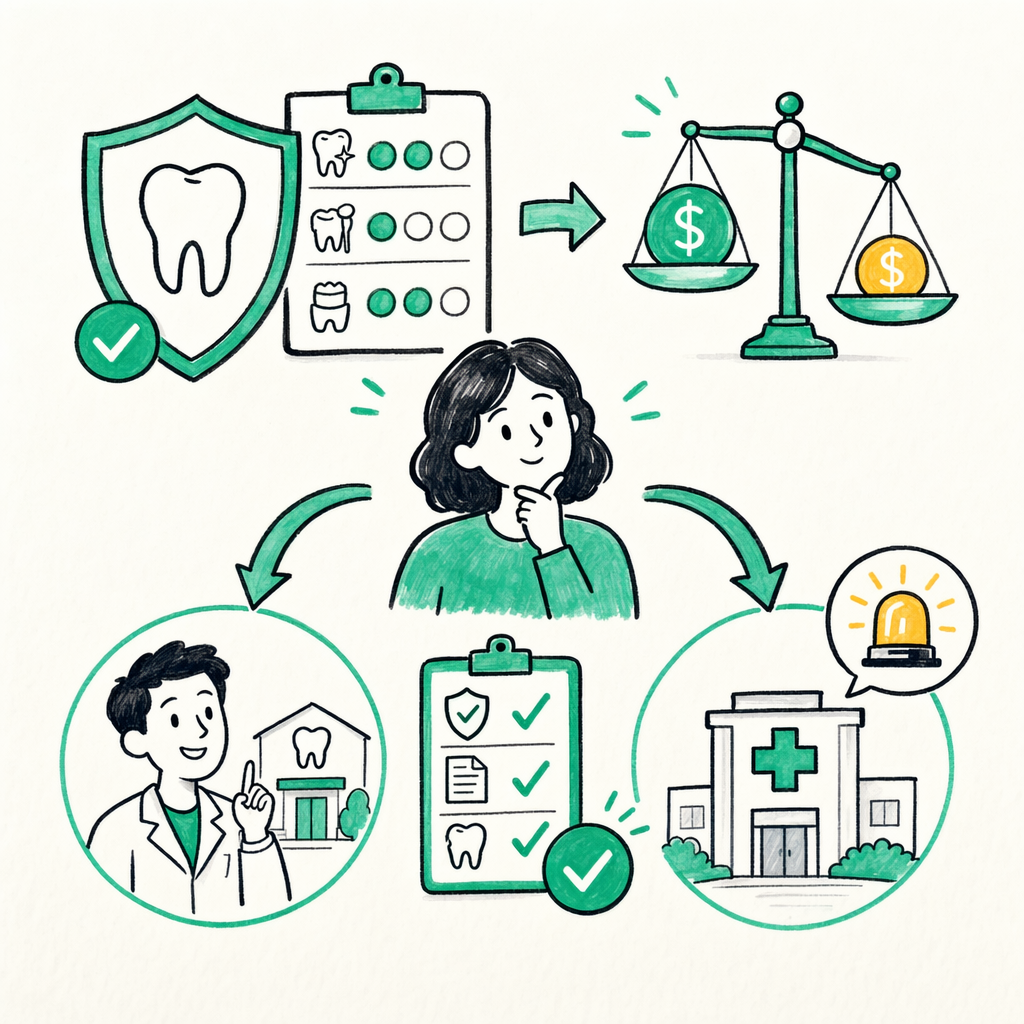
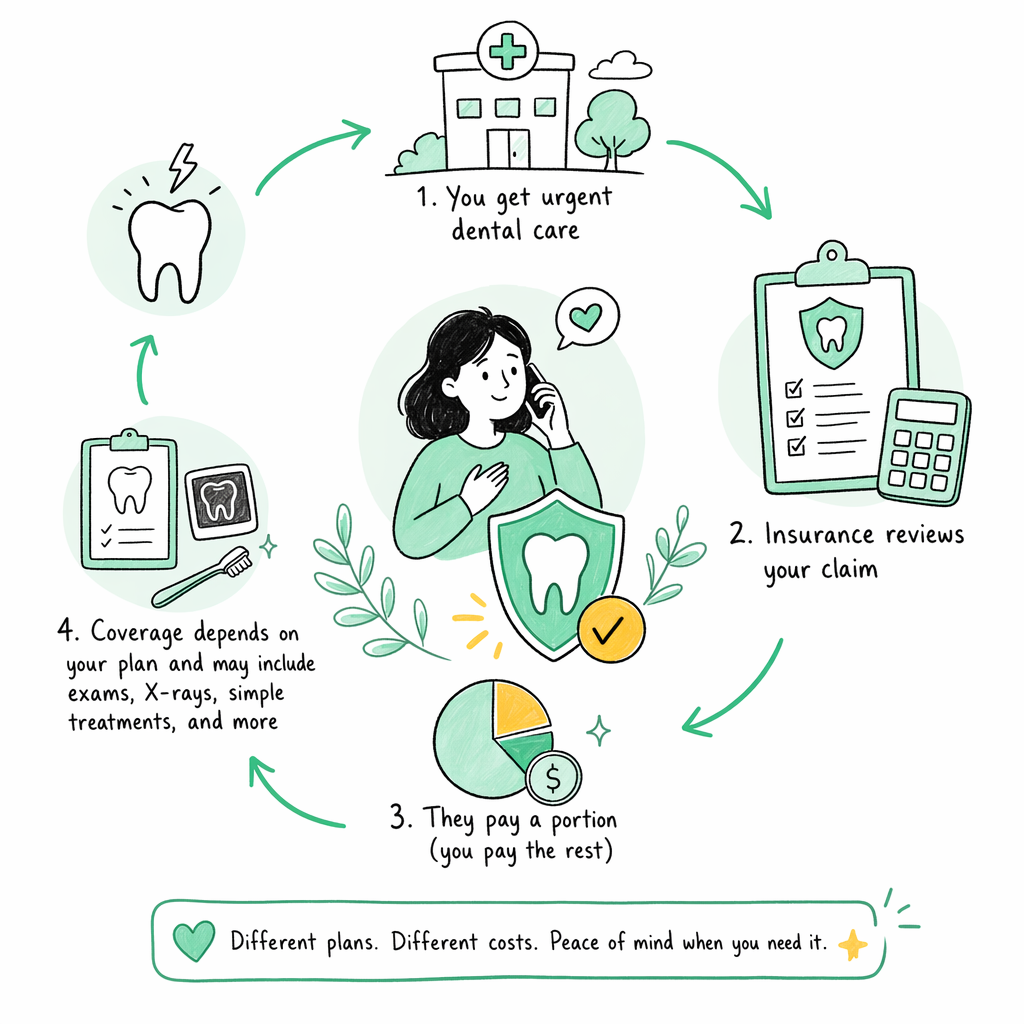
Dental insurance often covers urgent care, but the amount depends on your plan, the dentist, and where you live. Some plans help more with exams, X-rays, simple repairs, or pain relief than with bigger procedures.
If you have severe tooth pain, a broken tooth, swelling, or bleeding, you still need to see a licensed dentist. If you have trouble breathing or swallowing, swelling moving toward the eye or neck, or bleeding that will not stop, call 911 or go to the ER.
If you need help finding someone fast, you can start with get matched or review our guides.
What 'in-network' means
"In-network" means the dentist has an agreement with your insurance company. That often means lower costs for you, but not always the same cost at every office.
"Out-of-network" means the dentist does not have that agreement. You may still be able to go there, but your bill could be higher, and your plan may cover less or nothing for some services.
Because rules vary by state and by plan, it helps to ask the office and the insurance company the same basic question: is this dentist in my network for emergency care?
What to check before you go
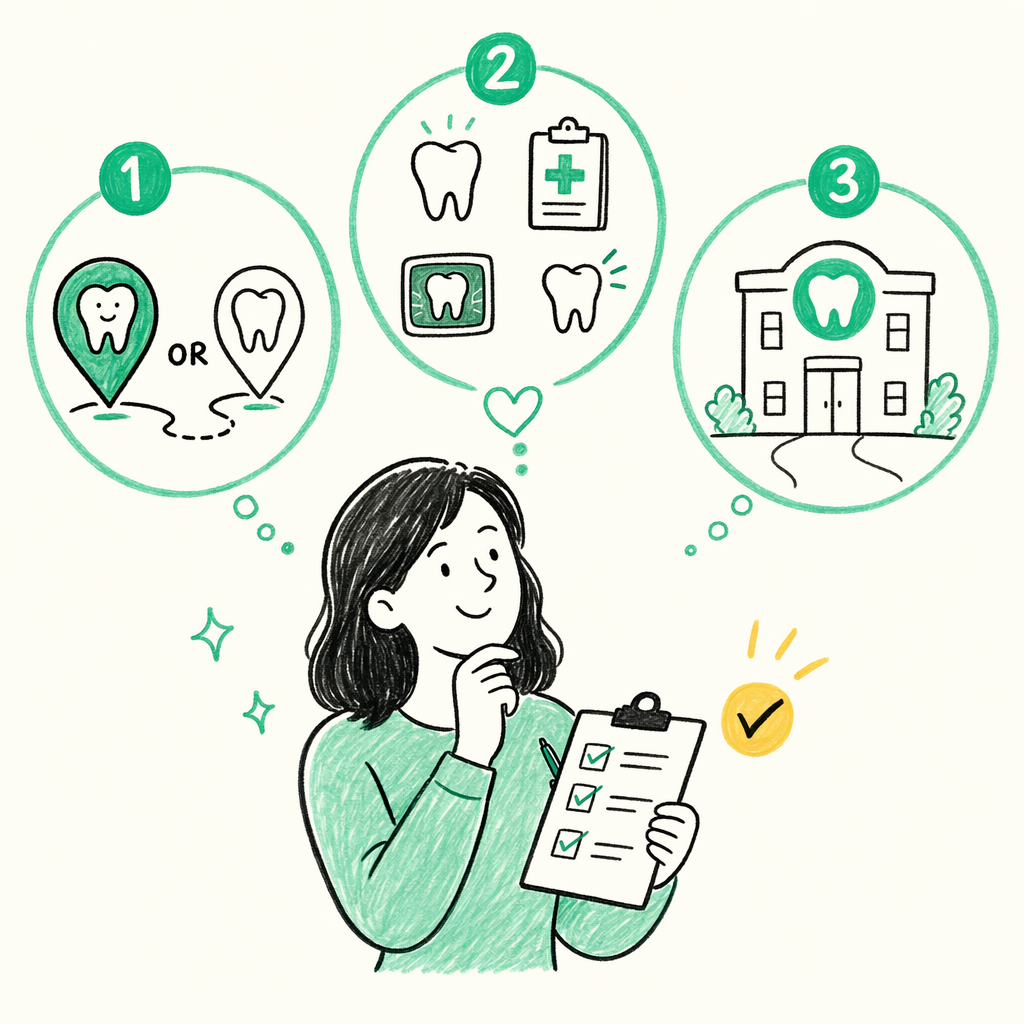
- Is the dentist in-network or out-of-network?
- Does your plan cover emergency visits, urgent exams, X-rays, or pain-related treatment?
- Do you need to use a specific office, phone line, or approval step first?
- Is there a waiting period, annual limit, or deductible?
- What is the office address, hours, and accepted payment methods?
If you are not sure what to ask, keep it simple. Ask for the "price range for an emergency visit" and whether the office can check your insurance before you arrive. Coverage and rules can vary by state and by plan.
What if you do not have dental insurance
You can still get help. Many emergency dental offices, community clinics, and walk-in dentists see uninsured patients, and some offer payment plans or lower-cost options.
A good first step is to look for a same-day or after-hours dentist near you and ask for the estimated range before you go. If you need contact help only, SteadyTooth can help collect contact details only — no medical information needed.
You can also look at our costs page for general cost ranges, keeping in mind that prices vary by case, city, and dentist.
Simple things you can do while you wait
Rinse gently with warm salt water if your mouth is sore. Put a cold compress on the cheek for swelling. If a tooth was knocked out, keep it in milk if you can and get to a dentist right away.
For pain, use over-the-counter medicine only as directed on the label. Do not put aspirin directly on the gum or tooth. These are general self-care steps only, and they do not replace dental care.
If you are scared or in pain, you do not need to figure out the whole system at once. Start with the nearest licensed dentist, or call 911 / go to the ER for the red flags above.
Dental insurance may help with emergency dental care, but the amount depends on your plan, so check the basics and see a licensed dentist, or go to the ER for danger signs.
SteadyTooth is a free matching service, not a dental provider or medical service, and does not give medical or dental advice or a diagnosis. The information here is general and educational. In a life-threatening emergency — trouble breathing or swallowing, swelling spreading toward the eye or neck, or uncontrolled bleeding — call 911 or go to the nearest emergency room. Costs and care vary by case, dentist, city, and state; always confirm details directly with a licensed dentist.
Common questions
Does dental insurance cover emergencies right away?
Sometimes, but not always fully. Coverage depends on your plan, whether the dentist is in-network, and what treatment is needed, so it is best to check the plan and call the office before you go if you can.
What does in-network mean for a dental emergency?
It means the dentist has a contract with your insurance company. That usually lowers your cost, but emergency coverage still depends on the details of your plan and the office.
What if I have no dental insurance?
You can still see an emergency dentist, community clinic, or urgent dental office. Ask about the visit price range, payment options, and whether they can see you soon.
Related help
Dental emergency guides
Honest, plain-language guides on handling a dental emergency, paying for urgent care without insurance, and finding help in your language.
Keep readingFind an emergency dentist near you — free
Tell us your city and how to reach you and we'll connect you, free, with an emergency dentist near you. Contact details only — no medical information needed.
Keep readingFind your symptom and what to do right now
Pick what's happening — severe tooth pain, a knocked-out or broken tooth, swelling or an abscess, bleeding — and get calm, plain-language steps plus a free way to find an emergency dentist.
Keep reading