Jaw pain or tooth pain — telling them apart
Jaw pain and tooth pain can feel similar, especially at night. This guide helps you sort out the likely source so you know what to do next—and how to reach an emergency dentist.
What to do right now
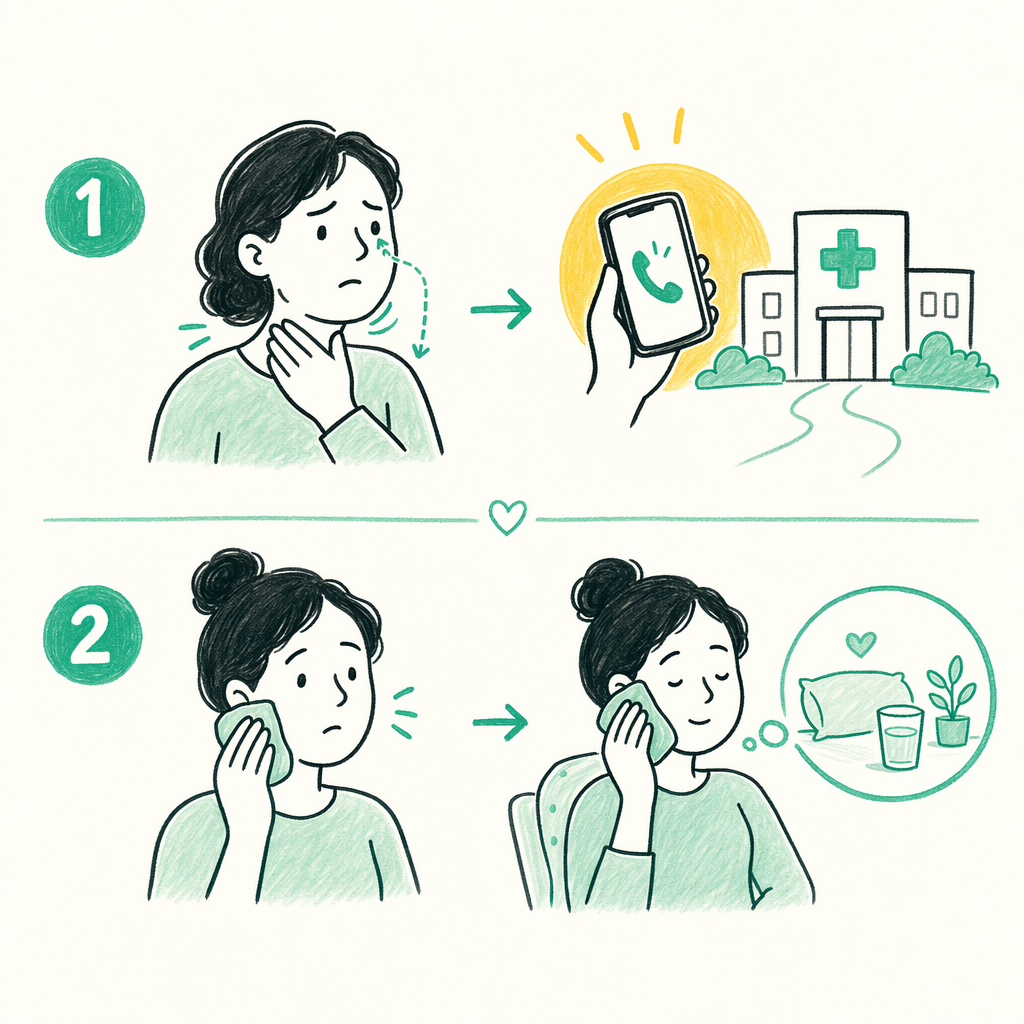
1. If you have trouble breathing or swallowing, or swelling that’s spreading toward your eye or neck, call 911 or go to the ER.
2. If there’s heavy bleeding that won’t stop, go to the ER.
3. For urgent tooth or jaw pain (especially with swelling), contact a licensed dentist or urgent dental service as soon as you can.
4. While you’re getting help, rinse gently with warm salt water and use a cold compress on the outside of your cheek for comfort.
Jaw pain vs. tooth pain: the quick differences
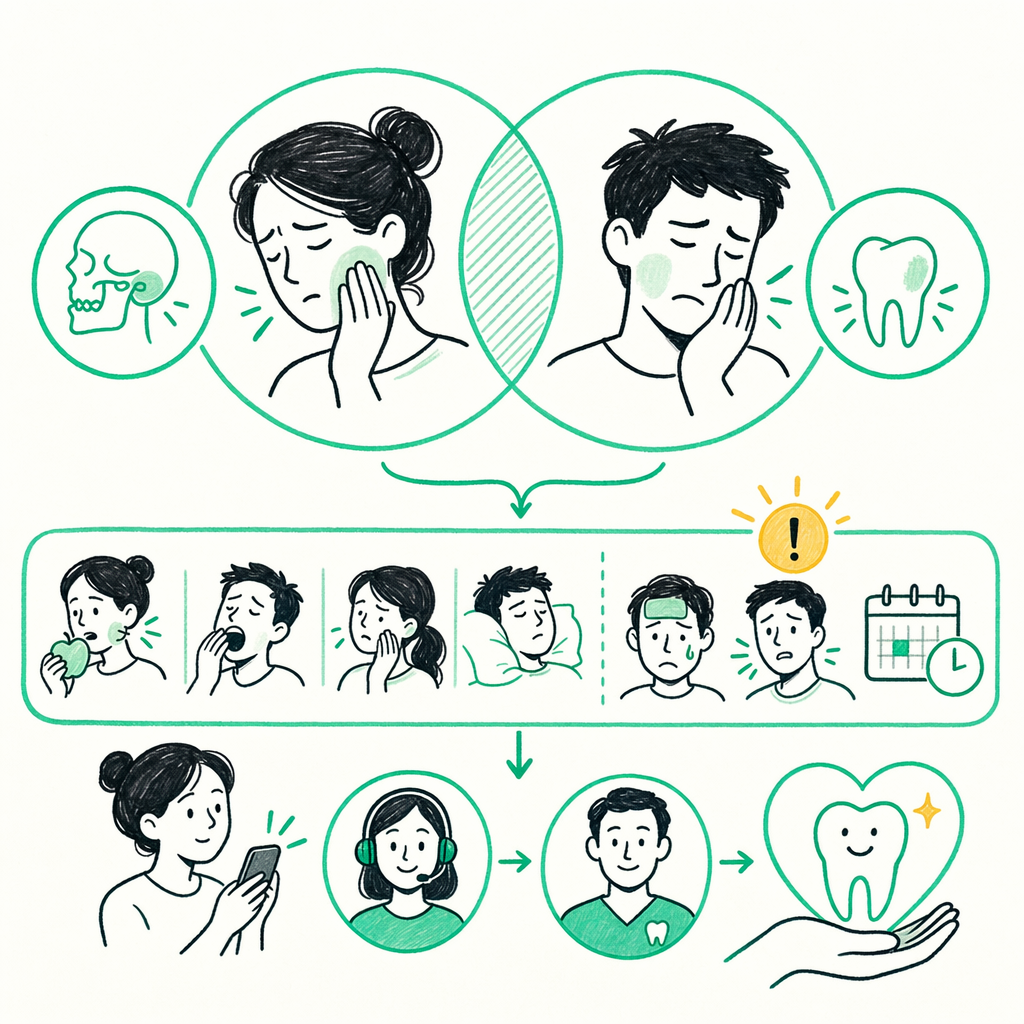
Tooth pain usually points to a specific tooth. It often gets worse with biting, chewing, hot or cold drinks, or while you press on one area.
Jaw pain often involves the jaw joint (TMJ) or the muscles around it. It may feel like an ache, tightness, popping, or soreness when you open your mouth, chew, or clench.
That said, people can’t always tell at home. Some conditions can refer pain to nearby areas, so “guessing” is unreliable.
Signs that lean more toward tooth pain
Look for clues like:
- Pain that feels centered around one tooth or a small spot
- Pain triggered by hot/cold, sweets, or biting
- Tenderness when you tap or press near a tooth
- Gum swelling near a tooth, an unpleasant taste, or drainage (often a possible abscess)
If you notice swelling, worsening pain, or a bad taste, treat it as urgent and get a dentist to look.
Signs that lean more toward jaw pain (TMJ or muscle-related)
Jaw-area clues can include:
- Pain that’s more in the jaw joint area (near the ear) or along the jaw muscles
- Clicking, popping, or grinding sensations when you open or close your mouth
- Stiffness or soreness after clenching, chewing gum, or stress
- Pain that changes with jaw movement rather than with hot/cold or one specific tooth
Even if it seems “just the jaw,” severe pain or swelling should still be checked by a dentist or doctor.
Simple self-checks you can do safely (no tools needed)
These are general, comfort-focused checks—not a diagnosis.
- Note what triggers the pain: biting/chewing, hot/cold, or jaw movement.
- Try gentle observation: is the pain more “one spot” or more “a whole area” (jaw line/joint)?
- Avoid testing by poking hard. If it hurts a lot, stop and get help.
If symptoms are rapidly getting worse, getting swelling, or waking you up repeatedly, seek urgent care.
Get help fast: contact a dentist emergency line
If your pain is severe, ongoing, or paired with swelling or bleeding, you deserve timely care. SteadyTooth is a FREE service that helps you connect with an emergency dentist near you.
To get matched, use Get matched and share your contact details only—no medical or dental history. Tell us how soon you need help and your preferred language.
If you want to plan ahead, see Symptoms for emergency warning signs and Costs for general pricing ranges that vary by case and location.
Jaw vs. tooth pain can overlap, so check what triggers it and watch for red flags—then contact an emergency dentist; SteadyTooth is free to help you get connected.
SteadyTooth is a free matching service, not a dental provider or medical service, and does not give medical or dental advice or a diagnosis. The information here is general and educational. In a life-threatening emergency — trouble breathing or swallowing, swelling spreading toward the eye or neck, or uncontrolled bleeding — call 911 or go to the nearest emergency room. Costs and care vary by case, dentist, city, and state; always confirm details directly with a licensed dentist.
Common questions
My jaw hurts and my tooth hurts—how do I tell which one is causing it?
They can overlap. Tooth pain often changes with hot/cold or biting and feels centered on one tooth. Jaw pain is more tied to opening/closing your mouth or jaw movement and can include clicking or muscle tightness. If the pain is severe or there’s swelling, get a licensed dentist to check.
When should I treat jaw/tooth pain as an emergency?
Go to the ER or call 911 for trouble breathing or swallowing, or swelling spreading toward the eye or neck, or uncontrolled bleeding. For other severe pain—especially with swelling—contact an emergency dentist as soon as possible.
Is it okay to wait a day if I’m not sure it’s tooth pain?
If pain is manageable and there’s no swelling or red-flag symptoms, a short delay may be okay for some people. But because some dental problems worsen quickly, it’s still safest to contact a dentist urgently if the pain is strong, keeps returning, or is getting worse.
What can I do at home while I’m waiting for a dentist?
Rinse gently with warm salt water, use a cold compress on your cheek for comfort, and take over-the-counter pain relief exactly as directed on the label. Avoid heat on swelling, and avoid chewing on that side. Then get a dentist to examine you.
Does SteadyTooth help me with costs or insurance questions?
You can review general guidance in [Costs](/costs/), and coverage rules vary by state and plan. SteadyTooth focuses on connecting you to an emergency dentist; it does not replace a dentist’s evaluation.
Related help
Quick answers for dental emergencies
Short, plain-language answers to the questions people ask in a dental emergency — tooth pain, knocked-out and broken teeth, swelling, cost, and finding care fast.
Keep readingFind your symptom and what to do right now
Pick what's happening — severe tooth pain, a knocked-out or broken tooth, swelling or an abscess, bleeding — and get calm, plain-language steps plus a free way to find an emergency dentist.
Keep readingFind an emergency dentist near you — free
Tell us your city and how to reach you and we'll connect you, free, with an emergency dentist near you. Contact details only — no medical information needed.
Keep reading