Knocked-out tooth — what to do in the next minutes
If a tooth got knocked out, the next few minutes matter. Stay as calm as you can, protect the tooth, and get to a licensed dentist right away.
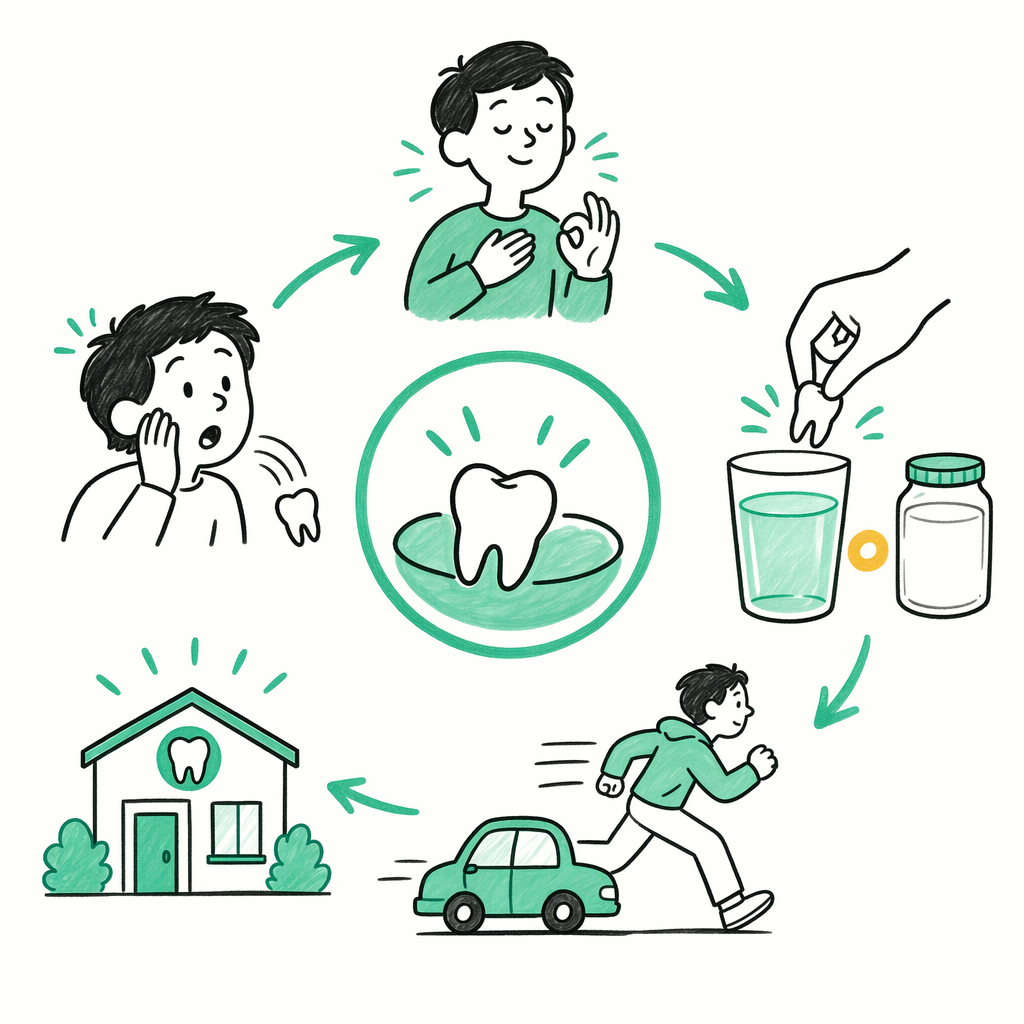
What to do right now
- Check for true emergency warning signs first. If there is trouble breathing or swallowing, swelling spreading toward the eye or neck, or bleeding that will not stop, call 911 or go to the ER.
- Find the tooth and pick it up by the crown only — the chewing part you normally see. Do not hold the root.
- If the tooth is dirty, rinse it gently with milk or clean water for just a few seconds. Do not scrub it, scrape it, or wrap it in tissue.
- If it is an adult tooth and you can do it gently, try placing it back into the socket right away. Face it the right way. Bite down softly on clean gauze or a clean cloth to help hold it in place.
- If you cannot put it back in, keep the tooth moist. Place it in milk if possible. If milk is not available, hold it inside your cheek only if you can do so safely without swallowing it. If not, use a clean container with a little saliva.
- Put a cold compress on the outside of the cheek to help with swelling.
- If needed, use over-the-counter pain relief as directed on the label.
- Go to a licensed dentist immediately. You can use same-day emergency dentist help or get matched for nearby care. Contact details only — no medical information needed.
- Handle the tooth by the crown, not the root
- Keep the tooth moist at all times
- See a dentist right away
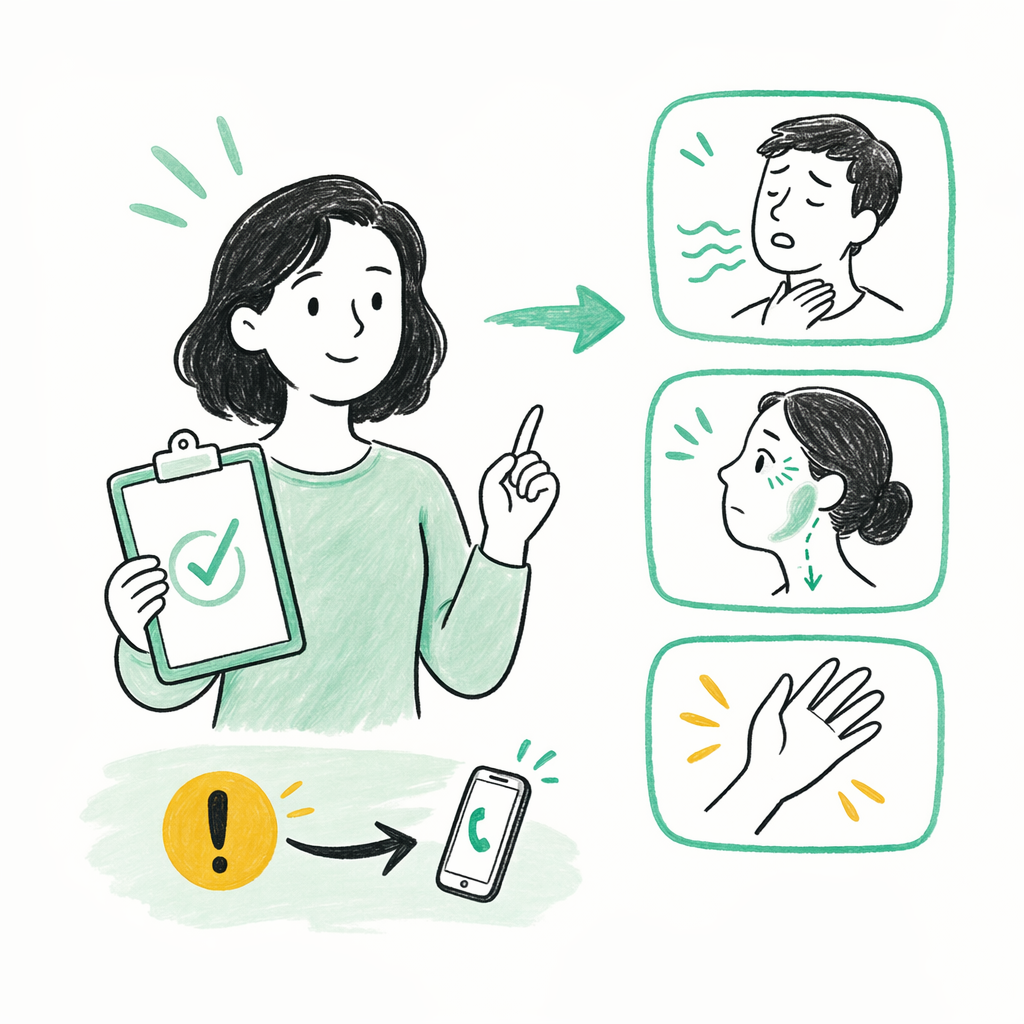
When this is an emergency
A knocked-out tooth is a dental emergency. Fast care gives the best chance to save the tooth, especially for an adult tooth. Even if pain seems mild, do not wait until tomorrow if you can avoid it.
Go to an ER or call 911 for life-threatening problems: trouble breathing or swallowing, swelling spreading toward the eye or neck, or uncontrolled bleeding. A hard hit to the face can also come with a jaw injury, concussion, or other injuries that need medical care.
If the tooth that came out is a baby tooth, it still needs prompt dental care, but do not try to place it back in. A licensed dentist can tell you the safest next step. This page is general information only, not a diagnosis or personal dental advice.
A few important do's and don'ts
Do keep gentle pressure on bleeding with clean gauze or a clean cloth. Do rinse your mouth gently with warm salt water if there is dirt or blood in the mouth. Do use a cold compress on the cheek for short periods.
Do not scrub the tooth. Do not clean it with soap, chemicals, or alcohol. Do not let it dry out. Do not store it in plain tap water if you have better options like milk.
If more than one tooth is injured, or if the tooth is cracked, chipped, or pushed out of place instead of fully knocked out, you may also want to read more symptoms and still get urgent dental care.
How to find emergency dental care now
The clearest next step is to contact a licensed dentist who handles urgent cases. If your usual office is closed, look for after-hours or same-day emergency dental care near you.
SteadyTooth is a free service for people in the United States, especially new immigrants and non-native English speakers, who need help finding emergency dental care. We are not a dentist, clinic, or medical provider. We share general information and help you connect with a dentist.
You can get matched using contact details only — no medical information needed. Share your name, phone, city or ZIP, how soon you need help, and preferred language. We do not need your treatment details or health records in writing.
What it may cost
Emergency dental costs vary by the injury, the dentist, and your city. There is usually a visit fee, and there may be added costs for X-rays, repositioning or stabilizing the tooth, or other treatment if the tooth cannot be saved.
A simple emergency exam may cost less than a full treatment visit, but the total can rise if the tooth and surrounding tissue need more care. If the injury involved other teeth or facial trauma, costs may be higher. You can read more on our costs page.
If you have dental insurance, ask the office what they can check for you. If you have Medicaid or other coverage, rules and dental benefits vary by state.
What happens at the dental visit
A licensed dentist will examine the area, check whether the tooth can be saved, and look for injury to the gums, bone, or nearby teeth. They may take X-rays. The treatment depends on the tooth, how long it was out, and the extent of the injury.
Sometimes the tooth can be placed back and stabilized. Sometimes it cannot. The dentist can explain the options, likely next steps, and follow-up care. What happens next is case by case, so avoid assuming the result before you are seen.
If you need help locating urgent care now, start with same-day emergency dentist or get matched.
If a tooth is knocked out, keep calm, keep the tooth moist, and get to a licensed dentist right away.
SteadyTooth is a free matching service, not a dental provider or medical service, and does not give medical or dental advice or a diagnosis. The information here is general and educational. In a life-threatening emergency — trouble breathing or swallowing, swelling spreading toward the eye or neck, or uncontrolled bleeding — call 911 or go to the nearest emergency room. Costs and care vary by case, dentist, city, and state; always confirm details directly with a licensed dentist.
Common questions
Can a knocked-out tooth be saved?
Sometimes, yes — especially with fast care for an adult tooth. The best next step is to keep the tooth moist and see a licensed dentist right away.
Should I put the tooth back in myself?
If it is an adult tooth and you can do it gently, placing it back in the socket may help. Handle it by the crown only. If you cannot do that safely, keep it in milk and get to a dentist immediately.
What if it is a baby tooth?
Do not try to put a baby tooth back in. A child should still be seen promptly by a licensed dentist to check for injury and the safest next step.
What if I cannot find a dentist tonight?
Look for after-hours emergency dental care near you or use [get matched](/get-matched/) for help finding a licensed dentist. If there is trouble breathing or swallowing, swelling spreading toward the eye or neck, or uncontrolled bleeding, call 911 or go to the ER.
What should I store the tooth in?
Milk is a common option. If that is not available, a little saliva in a clean container may help. Try not to let the tooth dry out, and do not scrub it.
Is SteadyTooth free?
Yes. SteadyTooth is free for the reader. We are not a dentist or clinic, and we only collect contact details so we can help connect you with care — no medical information needed.
Related help
Find your symptom and what to do right now
Pick what's happening — severe tooth pain, a knocked-out or broken tooth, swelling or an abscess, bleeding — and get calm, plain-language steps plus a free way to find an emergency dentist.
Keep readingFind an emergency dentist near you — free
Tell us your city and how to reach you and we'll connect you, free, with an emergency dentist near you. Contact details only — no medical information needed.
Keep readingWhat an emergency dentist visit really costs
Honest, plain-language cost ranges for an emergency dental visit, extraction, or root canal, plus ways to pay without insurance. Real numbers depend on the problem, dentist, and city.
Keep reading