Bleeding gums that won't stop — what to do
Bleeding gums can be from irritation, gum disease, or something that needs urgent care. If it won’t stop, the safest next step is to rule out a true emergency and then get a dentist to check it soon.
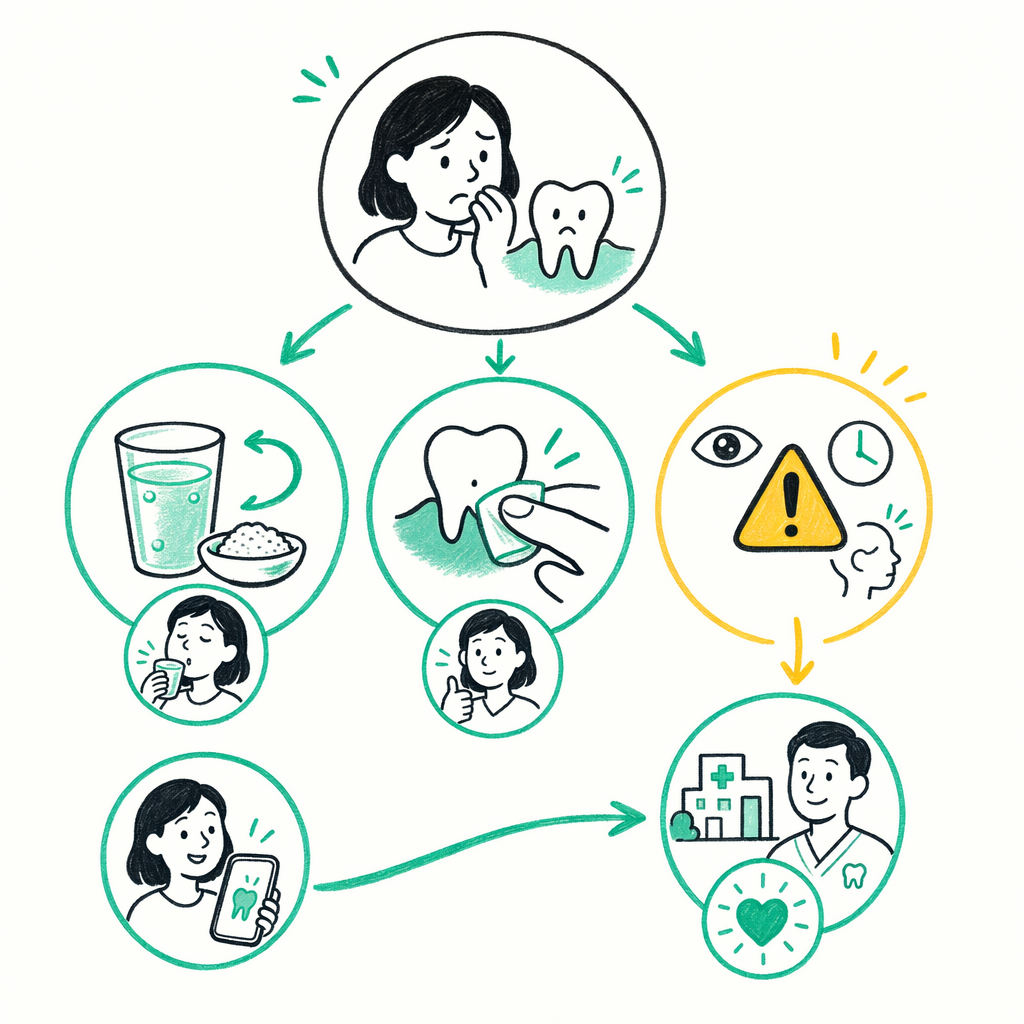
What to do right now
1. If you’re bleeding heavily and it won’t slow down after 15 minutes of steady pressure, or you feel weak, dizzy, or unwell, go to the ER or call 911.
2. If you have trouble breathing or swallowing, or you notice swelling spreading toward your eye or neck, seek emergency care now.
3. Rinse gently with warm salt water (½ teaspoon salt in a cup of warm water). Do not scrub or pick at the area.
4. Put cold on the outside of your cheek for short intervals (for comfort, not as a cure).
5. If there’s a cut or tooth/gum injury, press a clean gauze or cloth on the bleeding spot lightly but steadily.
6. Avoid smoking, alcohol mouthwash, and very hot/spicy foods until you’re evaluated.
7. Arrange dental care as soon as possible. If you can’t reach a dentist, use SteadyTooth to get matched with an emergency dentist near you. Get matched.

When bleeding gums count as an emergency
Most gum bleeding is not life-threatening, but “won’t stop” can sometimes be more serious.
Get emergency help (ER or 911) if you have any of these:
- Trouble breathing or swallowing
- Swelling that’s spreading toward your eye or neck
- Uncontrolled bleeding, or you can’t keep up with the bleeding even with steady pressure
If you’re on blood thinners, bleeding can be harder to stop. You still shouldn’t wait it out—contact a dentist or a doctor promptly. If you’re unsure, it’s reasonable to seek urgent care.
Common reasons gums bleed (and why you should still be checked)
Bleeding gums can happen for many reasons, including gum irritation (like aggressive brushing), gum inflammation from plaque, or an infection. Sometimes bleeding is linked to injuries or dental problems.
Because the mouth has many possible causes, it’s hard to know what’s happening without an exam. Even if the bleeding slows down after home care, a dentist should check it—especially if it keeps coming back, is paired with bad taste or pus, or you have increasing pain.
Home care you can do safely while you arrange a dentist visit
These steps are for comfort and general support only. They don’t replace a dental exam.
- Warm salt-water rinses: 2–4 times a day, gently. Don’t rinse aggressively.
- Cold compress on the outside of the cheek: short intervals for discomfort.
- Gentle brushing and flossing: keep it soft and careful, and avoid the exact spot that’s actively bleeding if it’s too painful.
- Stay hydrated and stick to soft foods if chewing hurts.
If you’re using any over-the-counter pain relievers, follow the label directions exactly. If you’re on blood thinners or have a medical condition, ask a clinician/pharmacist first.
How to get an emergency dentist near you (free)
SteadyTooth is a FREE multilingual service that helps you connect with a same-day or after-hours emergency dentist near you.
To get matched, share contact details only (name, phone, city/ZIP, how soon you need help, and preferred language). No medical information is required. Contact help if you need guidance on what to choose.
Cost varies by case, dentist, and city, but it’s always free to use SteadyTooth. You can read general info about possible costs here: costs.
If you’re not sure whether to wait or go in
Use this simple rule: if bleeding is heavy, won’t stop, or you’re feeling unwell, don’t wait.
If bleeding is mild and has stopped after gentle care, you still should schedule a dental check soon—especially if it recurs. For broader symptom help, see symptoms.
If your gums are bleeding and it won’t stop, use gentle salt-water rinses and pressure, watch for emergency red flags, and get help from a licensed emergency dentist—SteadyTooth can match you for free.
SteadyTooth is a free matching service, not a dental provider or medical service, and does not give medical or dental advice or a diagnosis. The information here is general and educational. In a life-threatening emergency — trouble breathing or swallowing, swelling spreading toward the eye or neck, or uncontrolled bleeding — call 911 or go to the nearest emergency room. Costs and care vary by case, dentist, city, and state; always confirm details directly with a licensed dentist.
Common questions
I have bleeding gums, but no big pain. Should I still worry if it won’t stop?
Yes. Persistent gum bleeding—especially if it doesn’t slow down after gentle pressure and rinsing—needs a dental evaluation. Some causes are treatable, but it’s best not to guess.
How long is “too long” for bleeding gums?
A common guideline is to seek urgent care if it doesn’t slow down after about 15 minutes of steady pressure, or sooner if it’s heavy. If you have red-flag symptoms like trouble swallowing/breathing, spreading swelling, or uncontrolled bleeding, go to the ER or call 911.
I’m on blood thinners. What should I do if my gums bleed a lot?
Bleeding may be harder to control. Contact a dentist or a clinician promptly, and if bleeding is uncontrolled or you feel unwell, seek emergency care. If you’re unsure, it’s safer to be checked right away.
Will SteadyTooth tell me what the problem is?
No. SteadyTooth provides general information and helps you connect with a licensed emergency dentist near you. The dentist will evaluate your situation in person.
Related help
Quick answers for dental emergencies
Short, plain-language answers to the questions people ask in a dental emergency — tooth pain, knocked-out and broken teeth, swelling, cost, and finding care fast.
Keep readingFind your symptom and what to do right now
Pick what's happening — severe tooth pain, a knocked-out or broken tooth, swelling or an abscess, bleeding — and get calm, plain-language steps plus a free way to find an emergency dentist.
Keep readingFind an emergency dentist near you — free
Tell us your city and how to reach you and we'll connect you, free, with an emergency dentist near you. Contact details only — no medical information needed.
Keep reading